Fire can start in just a few seconds. A small spark from an old wire, a forgotten stove, or a leaking gas cylinder is often enough. What happens after that depends on how ready you are. Having the right fire safety products at home or at your shop can save lives and property.
This guide will help you understand which fire safety products are important, why you need them, where to keep them, and what to check before buying.
Table of Contents
Why Fire Safety Products Matter in Nepal
Many homes and businesses in Nepal face the same fire risks. Some common ones are:
LPG gas cylinders used for cooking, which can leak or catch fire if not handled carefully
Old or overloaded electric wiring, common in older houses and buildings
Crowded shops and markets where fire can spread fast from one shop to another
Buildings with narrow stairs or exits that get blocked by goods
Use of candles or heaters during power cuts
No single product can remove all these risks. But if you have the right tools, kept in the right place, and checked regularly, you get precious time to react, control small fires, and reach safety.
Top 10 Fire Safety Products for Homes and Businesses
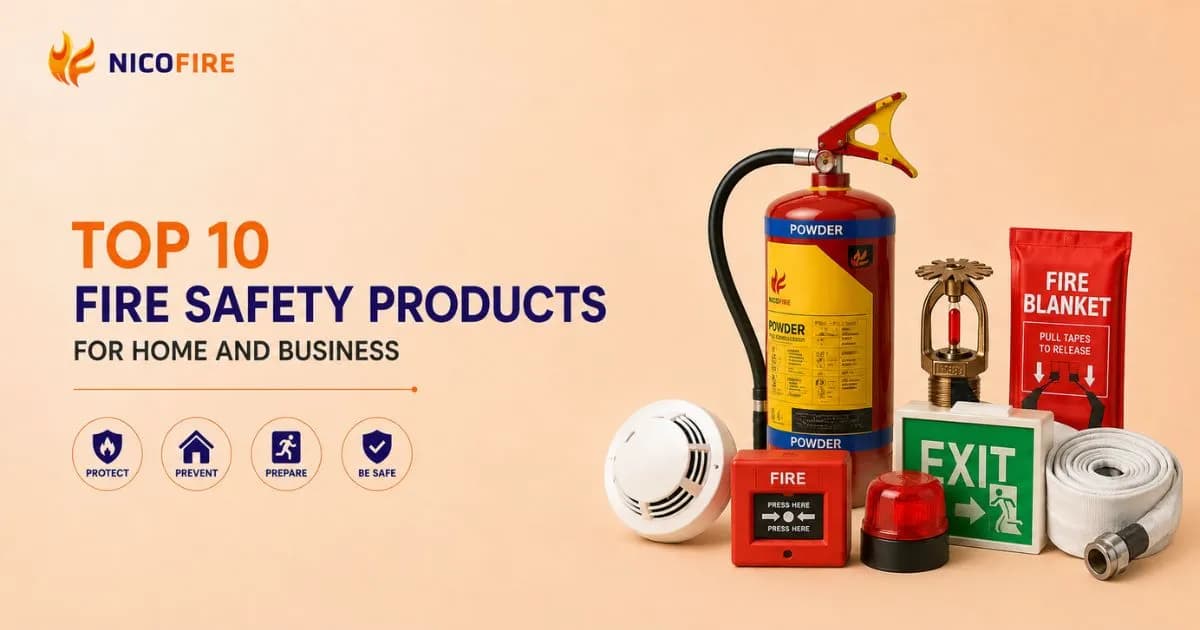
Here are the products that matter most. Each one has a job to do. Some are for small fires, some warn you early, and some are only for bigger buildings.
1. Fire Extinguisher
A fire extinguisher is one of the first tools you can use to control a small fire before it spreads. It is useful in homes, kitchens, offices, shops, and vehicles.
There are different types of fire extinguishers, and choosing the right one is important:
ABC Dry Powder Fire Extinguisher: Good for common fires involving wood, paper, cloth, fuel, and electrical equipment. It is a good choice for homes, offices, and shops.
CO2 Fire Extinguisher: Mainly used for electrical fires. It does not leave powder or foam, so it is suitable for offices, computer rooms, and electrical equipment.
Foam Fire Extinguisher: Good for oil and fuel fires. It is commonly used in workshops, stores, and other commercial areas.
Clean Agent Fire Extinguisher: Leaves little to no residue, making it suitable for computers, servers, and other expensive equipment.
Lithium Ion Battery Fire Extinguisher: Designed for fires involving batteries found in phones, laptops, power banks, and electric vehicles. These fires need special care and the right type of extinguisher.
For homes, one or two fire extinguishers may be enough. Keep one near the kitchen and another in an easy to reach place. Restaurants, hotels, offices, and factories may need more extinguishers depending on their size and fire risks.
2. Smoke Detector
A smoke detector gives an early warning before fire and smoke spread, even while people are asleep. This early warning is one of the biggest reasons people survive a fire.
Smoke detectors work well in bedrooms, hallways, kitchens (use a heat type here to avoid false alarms from cooking), and common areas. In hotels, schools, and offices, detectors that are all connected to one alarm system work much better than single, separate units.
A home may only need a few battery powered detectors. Bigger buildings usually need a proper system connected to one central panel.
3. Fire Blanket
A fire blanket is a simple cloth tool. No electricity needed. It is used to cover and stop small fires, especially kitchen fires from cooking oil or a pan catching fire. It works by cutting off the air supply to the flame.
Keep it near the kitchen, somewhere easy to grab quickly, not locked inside a cupboard. Fire blankets are useful for homes and also for businesses with kitchens, like restaurants, hostels, and canteens.
4. Fire Alarm System
A smoke detector warns one room. A full fire alarm system warns the whole building. It usually has smoke and heat sensors, manual alarm buttons, loud sounders, and one control panel.
This kind of system is usually needed for hotels, offices, schools, hospitals, shopping complexes, and factories, places where many people need to know about a fire at the same time. Small homes usually do not need a full system, unless it is a large house or a building with many rented rooms.
5. Emergency Exit Signs and Lights
During a fire, smoke can make rooms dark and confusing very fast. Lighted exit signs and emergency lights show people the way to the nearest safe exit, even during a power cut.
These are important for businesses, hotels, schools, and any building with many floors or a layout that visitors do not know well. Small homes with a simple layout may not need signs, but stairs in apartment buildings should have them.
6. Fire Hose Reel
A fire hose reel connects to a water pipe and sends out a strong stream of water. It can fight bigger fires than a small extinguisher can handle. It is mostly used in factories, warehouses, hotels, and large shopping complexes.
Hose reels need a proper water supply and should be set up and checked by trained professionals. This is usually not needed or practical for a normal home.
7. Gas Leak Detector
Since most homes in Nepal use LPG gas for cooking, a gas leak detector is a very useful early warning tool. It senses gas in the air before it becomes dangerous, giving you time to open windows and turn off the gas.
These are useful in home kitchens, restaurants, hostels, and any commercial kitchen. Place it near the gas cylinder or stove, but not right above the flame.
8. Fire Sprinkler System
A sprinkler system sprays water automatically when it senses high heat. It can control or stop a fire even if no one is present at that moment. This is one of the most effective ways to protect large buildings.
Sprinkler systems are mostly used in hotels, offices, shopping malls, warehouses, and factories, places that are too big for people to fight fire by hand alone. They need to be designed and installed by professionals, along with a reliable water supply. They are usually not needed in a normal home.
For more information about fire sprinklers, you can also check out our detailed guide on how fire sprinkler systems work. |
9. First Aid Kit for Burns
Even with good preparation, injuries can happen during a fire, or while trying to control one. A first aid kit with burn dressings, clean gauze, and basic supplies helps treat injuries until proper medical help arrives.
Every home and business should keep a basic first aid kit somewhere easy to reach, separate from other storage.
10. Fire Safety Signs and Evacuation Plan
Signs that show where extinguishers are, where the exits are, and where to meet outside help everyone, including visitors, know what to do in an emergency. This matters most in businesses, schools, hotels, and offices, where not everyone knows the building well.
For homes, a simple family talk about the exit route and a meeting spot outside is usually enough. For businesses, a written and displayed evacuation plan, along with regular fire drills, keeps staff and visitors safe.
Here is a simple comparison table showing the main use, purpose, and best place to use these fire safety products:
Product | Main Purpose | Best For |
Fire Extinguisher | Stop small fires early | Homes and Businesses |
Smoke Detector | Early warning from smoke | Homes and Businesses |
Fire Blanket | Cover small kitchen fires | Homes and Businesses |
Fire Alarm System | Warn the whole building | Businesses (larger buildings) |
Exit Signs and Lights | Guide people out in smoke or dark | Businesses and shared buildings |
Fire Hose Reel | Fight bigger fires with water | Businesses (factories, hotels) |
Gas Leak Detector | Warn about LPG or gas leaks | Homes and Businesses using gas |
Fire Sprinkler System | Stop fire automatically | Businesses (larger buildings) |
First Aid Kit | Treat burns and injuries | Homes and Businesses |
Signage and Evacuation Plan | Guide safe exit | Businesses and shared buildings |
Pro Tip: This table is a general guide only. What you actually need depends on your building size, how many people use it, its layout, and its specific fire risks. |
Basic Home Fire Safety vs Full Business Fire Protection
For a small home, a few portable products are usually enough. A home mostly needs an extinguisher, a smoke detector or two, a fire blanket if there is a kitchen, and a clear plan to exit.
For a business, hotel, school, or factory, this is not enough. These places usually need a proper fire safety check, more than one extinguisher matched to different risks, a connected alarm system, emergency lights, clear signs, and sometimes sprinklers or hose reels, depending on the building.
Buying a few extinguishers is not the same as having full fire protection. Bigger buildings, with more people, more wiring, and more stored goods, carry higher risk. They need a more careful plan, ideally guided by a qualified fire safety expert, based on the rules that apply to that type of building.
Where to Place Fire Safety Equipment
Where you keep your equipment matters as much as what you buy. Keep these points in mind:
Keep extinguishers and fire blankets near the highest risk areas, like kitchens, electric boards, and storage rooms
Keep equipment visible and easy to reach. Do not hide it behind furniture, stock, or locked cabinets
Fix extinguishers at a height most adults can reach easily
Place smoke and gas detectors as the manufacturer suggests, usually on the ceiling or upper wall, away from fans or vents
Never block exit paths or emergency lights with furniture, boxes, or parked vehicles
In buildings with many floors, keep equipment on every floor, not just the ground floor
Inspection, Testing, and Maintenance
Buying fire safety equipment is only the first step. If it is not checked and maintained, it may fail exactly when you need it most. Keep in mind:
Check extinguisher pressure gauges often, and get them serviced as recommended
Test smoke and gas detectors from time to time, and change batteries when needed
Keep a simple record of checkup and service dates for your business
Replace any equipment that is damaged, expired, or has already been used, even a little
Businesses should run fire drills regularly, so staff know how to use the equipment and how to exit safely
Common Mistakes to Avoid
Buying the wrong type of extinguisher for the actual risk
Keeping equipment somewhere hard to see or reach in an emergency
Thinking one or two extinguishers are enough for a large building
Skipping regular checks and servicing
Buying cheap, low quality, or uncertified products to save money
Blocking exits or stairs with goods, furniture, or vehicles
Not training staff or family members on how to use the equipment
Fire safety products work best when used together with good habits, like safe storage, staff training, an evacuation plan, and regular maintenance. No single product can promise full protection from fire. But the right mix, placed well and checked often, greatly improves your chances of staying safe.
Conclusion
Fire safety is not about buying one product and forgetting it. It is about having the right tools in the right place, checked regularly, and backed by good habits at home or at work.
Look at your own space, your kitchen, your wiring, your gas use, and your exits. Choose products that match those real risks, keep them visible and easy to reach, and maintain them well. That is what actually keeps homes and businesses in Nepal safe.
If you are looking to buy fire safety products, contact Nicofire for all kinds of fire safety equipment and solutions for your home, office, business, or commercial building.
Frequently Asked Questions
A fire extinguisher, at least one smoke detector, and a fire blanket for the kitchen cover most home fire risks. A gas leak detector is also useful if you cook with LPG.
This depends on the size of the space and the type of risk. A small shop may need just one. A larger office or a building with many floors usually needs more than one, placed on each floor.
An ABC dry powder extinguisher covers most kitchen risks. But a fire blanket is often quicker and easier to use for oil or pan fires.
Most small homes do not need a full alarm system. A few smoke detectors are usually enough. Larger homes or buildings with many rented rooms may need a connected system.
Check the pressure and look for damage often. Have them professionally serviced on the schedule your supplier or the manufacturer recommends.
Not always. Sprinkler systems are usually recommended for larger commercial buildings, hotels, and warehouses. Whether a small business needs one depends on its size, layout, and the rules that apply.
No. Fire safety products lower the risk and give early warning or control. But they work best along with good prevention habits, staff training, safe storage, and a clear evacuation plan.
Comments
No comments yet.
Be the first to share your thoughts.