Shopping Cart
Your cart is empty
Add some fire safety products to get started
My Wishlist
Your wishlist is empty
Save your favorite products to view them later
Fire Safety Testing & Commissioning
Professional testing, inspection, and commissioning of fire safety systems.
HOW OUR TESTING & COMMISSIONING PROCESS WORKS?
Site Inspection & System Review
Testing Plan
Functional & Performance Testing
Integrated System Testing
Inspection & Issue Identification
Commissioning & Reporting
Our Fire Safety Consulting Services
Fire Risk Assessment & Audit
Fire Safety System Design (extinguishers, hydrants, suppression layout)
Building Plan & Layout Review
Compliance Documentation & NOC Assistance
Emergency Evacuation Plan Development
Staff Training Recommendations
Explore Fire Safety Training
Quick Consulting Inquiry
Why Choose Nicofire for Fire Safety Testing & Commissioning?
Testing for fire and life safety systems
Professional inspection by trained technicians
Functional, pressure and flow testing
Fire alarm and detector testing
Cause and effect testing
Detailed testing and commissioning reports
Branches
Professional Fire Safety Testing & Commissioning Services
Installing a fire safety or security system is not the final step. The system needs to be checked and tested to make sure the equipment is working properly and the different parts can work together when they are needed.
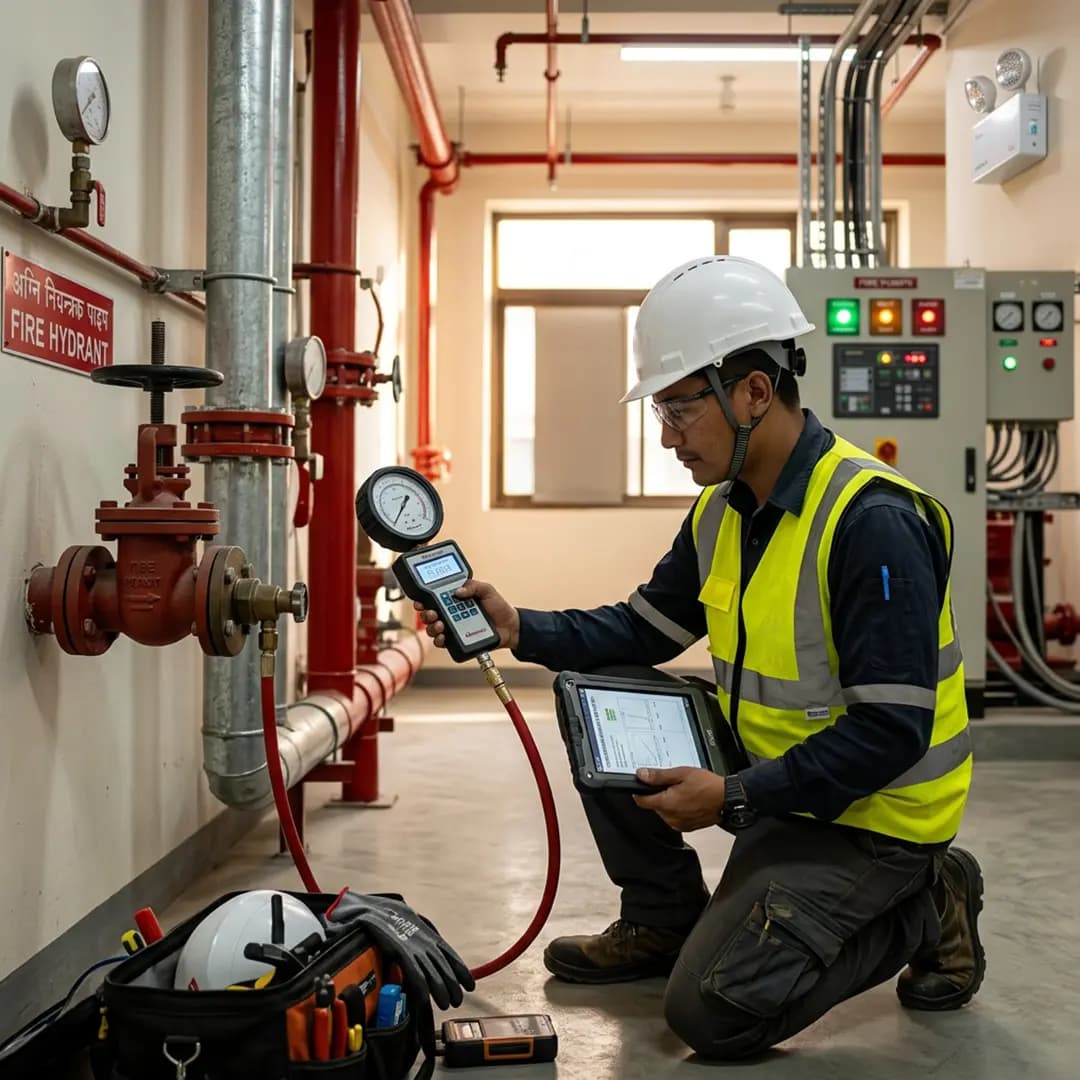
At Nicofire, we provide Testing, Inspection & Commissioning (TIC) services for fire hydrant systems, fire pumps, fire alarm systems, fire suppression systems, emergency lighting, fire doors, and ELV systems in Nepal. Our team checks the installed systems, identifies problems, and helps make sure they are ready for operation.
Testing and Inspection of Fire Safety Systems
Testing and inspection help confirm that a fire protection system has been installed correctly and is working as expected. The exact tests depend on the type of system, equipment, and building.
1. Fire Hydrant System Testing
We check the fire hydrant system to make sure water can reach the required points with suitable flow and pressure. The testing may include hydrant valves, pipes, water supply, and other connected components.
2. Fire Pump Testing
Fire pumps are an important part of many water-based fire protection systems. Pump testing helps check whether the pump starts correctly and provides the required water flow and pressure.
3. Fire Alarm Testing
A fire alarm system needs to respond properly when a detector or manual call point is activated. We test the alarm panel, detectors, manual call points, sounders, strobes, and other connected devices.
4. Fire Suppression System Testing
Fire suppression systems need careful testing because they are designed to protect areas with specific fire risks. We check the detection, control, alarm, and other system components according to the installed system.
Functional Testing
Functional testing checks whether the equipment performs its intended function. We test the different parts of the system and confirm that they respond correctly during the required operation.
This can include pumps, alarms, detectors, emergency lights, access control devices, and other connected equipment.
Pressure and Flow Testing
Water-based fire protection systems depend on proper water pressure and flow. Pressure and flow testing helps identify whether the system can deliver water as expected.
These tests can be carried out for fire hydrants, hose reels, fire pumps, and other suitable water-based systems.
Fire Alarm and Detector Testing
Fire alarm devices need to respond correctly when smoke, heat, or manual activation is detected. We test detectors, manual call points, alarm sounders, strobes, control panels, and related devices.
1. Detector Testing
Smoke and heat detectors are checked to confirm that they can detect the required condition and send the correct signal to the fire alarm panel.
2. Alarm Testing
Alarm testing checks whether the alarm is activated correctly and whether sounders, strobes, and other warning devices operate as expected.
Cause & Effect Testing
Cause and effect testing checks what happens when a particular fire alarm or safety device is activated.
For example, activating a detector may need to trigger an alarm, release a door, shut down equipment, or send a signal to another building system. Testing these actions helps confirm that connected systems respond in the correct way.
Emergency Lighting and Fire Door Inspection
Emergency lighting should work when the normal power supply fails. We check emergency lights, exit signs, and related equipment to help confirm that escape routes remain visible.
Fire doors are also checked for their condition, fitting, hardware, seals, and proper operation. These inspections can help identify issues that may affect their fire protection performance.
ELV System Testing
ELV systems such as CCTV, access control, intercom, intrusion detection, and other integrated systems also need proper testing after installation.
We check the equipment, connections, communication, and integrated functions to make sure the systems are operating as planned.
Commissioning and Reports
After testing and inspection are completed, the system can be commissioned for operation. Commissioning confirms that the required equipment and connected systems have been checked and are ready for use.
We prepare commissioning and testing reports based on the work carried out. These reports can provide useful records of the tests performed, system condition, and any issues identified during the inspection.
Testing and Commissioning Services in Nepal
Regular testing and proper commissioning are important for keeping fire safety and life safety systems reliable. A system may appear to be working normally, but testing can identify problems that may not be visible during a normal inspection.
Nicofire provides professional Testing, Inspection & Commissioning services for fire extinguishers, fire hydrants, fire pumps, fire alarms, suppression systems, emergency lighting, fire doors, and ELV systems across Nepal.
Companies & Organizations We've Trained



Need Fire safety Testing & Commissioning Services?
Make sure your fire safety and ELV systems are working properly. Contact Nicofire for professional testing, inspection, commissioning, and reporting.
Related Services
Fire Extinguisher Refilling Service in Nepal
Fast, Reliable & Affordable Refilling for All Extinguisher Types
Fire Safety Training in Nepal
Nicofire provides professional fire safety training programs across Nepal to help organizations, businesses, schools, industries, and institutions create a safer working environment. Our certified training covers fire prevention, emergency response, evacuation procedures, and hands-on fire extinguisher operation to ensure compliance and preparedness during fire emergencies.
Fire Safety Consulting Services in Nepal
Expert Risk Assessment & Compliance Solutions for Homes, Businesses & Industries
Annual Maintenance Contract (AMC) for Fire Safety Equipment in Nepal
Keep Your Fire Safety & Security Systems Always Ready with Scheduled Maintenance
Fire Fighting Systems
Complete fire fighting system design, installation, and commissioning.
Fire Detection & Alarm Systems
Reliable fire detection and alarm systems for early fire warning.
Fire Doors & Passive Fire Protection
Reliable fire doors and passive fire protection for safer buildings.
Fire Suppression & Total Flooding Systems
Automatic fire suppression for critical and high-risk areas.
Emergency Lighting & Life Safety
Reliable emergency lighting and life safety solutions for safer evacuation.
Fire Safety & Rescue Solutions
Reliable safety and rescue equipment for fire and emergency situations.
ELV & Integrated Life Safety Systems
Integrated security and life safety solutions for modern buildings.
Fire Safety Testing & Commissioning
Professional testing, inspection, and commissioning of fire safety systems.
Fire Safety Audit & Risk Assessment
Professional fire safety audits and risk assessments for safer buildings.