

Fire does not wait, and it does not warn you before it grows. In just two or three minutes, a tiny flame can turn into a fire that fills an entire room with thick smoke and dangerous heat. This is exactly why fire sprinkler systems exist. They are one of the most reliable tools we have to catch a fire early, before it grows out of control.
In this guide, you'll learn how a fire sprinkler system works, step by step, from the moment a fire starts to the moment it is controlled.
Table of Contents
What Is a Fire Sprinkler System?
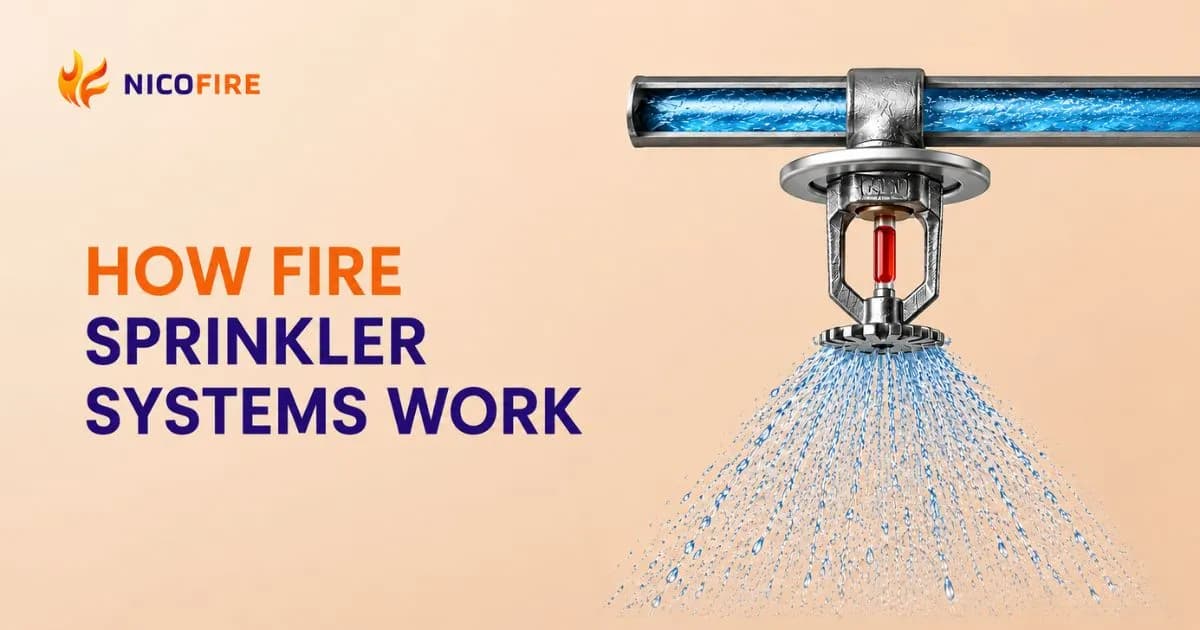
A fire sprinkler system is a network of pipes and sprinkler heads installed inside a building. It is connected to a water supply. When a fire starts and the heat reaches a certain level, the sprinkler head above the fire opens on its own and sprays water directly onto the flames.
The main purpose of a sprinkler system is not to put out a huge fire completely. Its real job is to control the fire in its early stage, slow it down, and give people enough time to escape safely. In many cases, sprinklers put out small fires on their own before they ever become big.
This is different from a fire extinguisher, which needs a person to use it. A sprinkler system works automatically, even if no one is in the room when the fire starts.
How a Fire Sprinkler System Works: Step by Step
A sprinkler head looks simple, just a small fitting on the ceiling, but a lot happens before water actually comes out. Here is exactly what takes place, from the moment a fire starts to the moment it gets controlled.
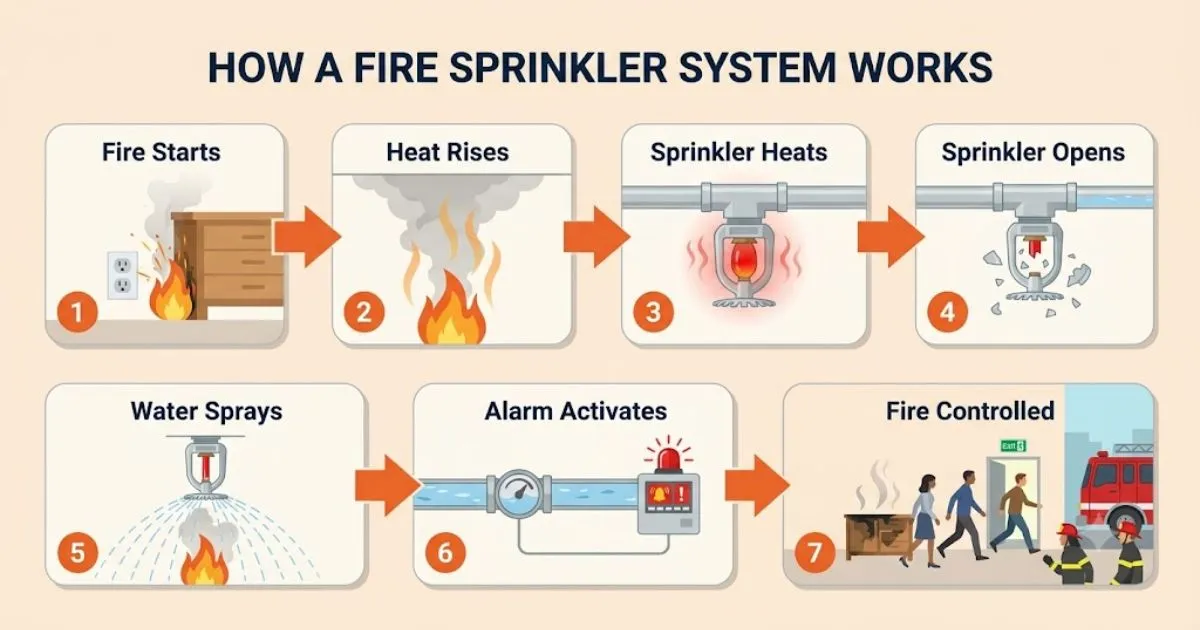
1. Fire Starts
A fire can start in many ways. It could be from a short circuit in the wiring, a mistake while cooking, or a spark landing near something flammable like paper, cloth, or gas. In the beginning, the fire is usually small and easy to miss if no one is watching closely.
2. Heat Rises
As the fire grows, it produces hot air and smoke. This hot air naturally moves upward and spreads across the ceiling. Within a short time, the temperature near the ceiling starts climbing fast, especially directly above the fire.
3. Sprinkler Head Heats Up
Every sprinkler head has a small part inside it that reacts to heat. Most sprinklers use a tiny glass bulb filled with liquid. Some older designs use a metal piece called a fusible link instead. This part is made to break or melt only after the temperature reaches a certain point, usually around 68 degrees Celsius in normal rooms. Until that heat level is reached, the sprinkler stays completely closed.
4. Sprinkler Head Opens
Once the heat around the sprinkler reaches that set level, the glass bulb shatters, or the metal link melts apart. This action releases a small cap that was holding back the water inside the pipe. The moment this cap comes off, the path for water is open.
5. Water Comes Out
Water inside the pipe is always kept under pressure, so it rushes out the instant the cap releases. At the tip of the sprinkler, a small metal piece called a deflector spreads the water into a wide pattern. This helps the water cover the fire and the area around it, instead of coming out as a single straight stream.
6. Alarm Turns On
As soon as water starts moving through the pipes, a device called a water flow switch senses this movement. It then sends a signal to trigger the building's fire alarm. People inside the building get warned right away. In many systems, this signal can also alert a monitoring company or the fire department, depending on how the system is set up.
7. Fire Gets Controlled
The water works to cool down the fire and lower the heat around it. In many cases, this is enough to put the fire out completely while it is still small. Even when the fire is not fully extinguished, this water buys important time. It slows the fire down, gives people a safer chance to get out, and helps firefighters handle the situation once they arrive.
You can also read our guide on how to use a fire extinguisher correctly to safely handle small fires before they spread. |
Main Components of a Fire Sprinkler System
A sprinkler system is made up of several parts working together. Here is a simple breakdown of each one.
Component | What It Does |
Sprinkler heads | Release water when heat reaches the activation temperature |
Water supply | The main source of water feeding the system (city supply, tank, or reservoir) |
Pipes | Carry pressurized water from the source to each sprinkler head |
Control valves | Allow water to flow into the system, or shut it off for maintenance |
Fire pump | Boosts water pressure so it reaches every part of the building with enough force |
Water storage tank | Stores a backup water supply, especially important in areas with weak municipal water pressure |
Alarm / water-flow device | Detects moving water in the pipes and triggers the fire alarm |
Every part plays a role. If even one part fails, such as a closed valve or a weak pump, the whole system can underperform when it's needed most.
Types of Fire Sprinkler Systems
Not every building uses the same type of sprinkler system. The right choice depends on the building's climate, layout, and risk level.
System Type | How It Works | Commonly Used In |
Wet pipe system | Pipes are always filled with water. Fastest response since water is ready to flow immediately. | Offices, homes, hotels, schools |
Dry pipe system | Pipes are filled with pressurized air instead of water. Water only enters after the air releases, following sprinkler activation. Slightly slower response. | Unheated spaces like parking garages, warehouses without heating |
Pre-action system | Requires two steps before water is released: first a fire detector must sense fire, then the sprinkler head must also activate. Reduces the chance of accidental water release. | Server rooms, museums, libraries, places with valuable equipment |
Deluge system | All sprinkler heads are open all the time. When a separate fire detection system triggers, water floods out of all heads at once. | High-risk industrial areas, chemical plants, fuel storage sites |
For most homes, apartments, offices, and hotels in Nepal, a wet pipe system is the standard and most practical choice.
Types of Sprinkler Heads
Sprinkler heads also come in different styles, depending on where they are installed.
Pendant sprinklers: Hang down from the ceiling. Most common type used in offices, homes, and hotel rooms.
Upright sprinklers: Point upward, usually used in areas with exposed pipes, like warehouses or basements.
Sidewall sprinklers: Mounted on a wall instead of the ceiling. Useful in corridors or rooms where ceiling installation is difficult.
Concealed sprinklers: Hidden behind a decorative cover plate that falls away when heat triggers the sprinkler. Popular in hotels and offices for a cleaner look.
Key Benefits of Fire Sprinkler Systems
A fire sprinkler system does much more than just spray water. It works quietly in the background, ready to respond the moment a fire starts, even if no one is around to notice it. Here are the main benefits it brings to any building.
Early fire control: Sprinklers act within minutes, often before the fire brigade even arrives. This early response is what makes the biggest difference in the outcome.
Protection of people: By controlling the fire quickly, sprinklers reduce smoke and heat buildup, giving people more time and a safer path to exit the building.
Reduced property damage: Because only the sprinklers near the fire activate, and water flow stops the fire early, damage is usually far less than what an uncontrolled fire would cause.
Reduced fire spread: Sprinklers cool the surrounding area, which helps stop fire from jumping to nearby rooms, furniture, or floors.
Support for emergency response: By the time firefighters arrive, the fire is often already under control or significantly weakened, making their job faster and safer.
Where Are Fire Sprinkler Systems Commonly Used?
Fire sprinkler systems are used across many types of buildings, including:
Residential buildings and apartments
Hotels and guest houses
Offices and corporate buildings
Shopping malls and retail stores
Hospitals and clinics
Schools and colleges
Warehouses and storage facilities
Factories and industrial units
In Nepal, sprinkler systems are becoming more common in newly constructed apartments, hotels, hospitals, and commercial complexes, especially in urban areas like Kathmandu, Lalitpur, and Pokhara, as building owners become more aware of fire safety needs.
Common Mistakes That Reduce Sprinkler Performance
Even a well-designed sprinkler system can fail to work properly because of small, avoidable mistakes:
Painting over sprinkler heads: This can block the heat-sensitive bulb from reacting properly.
Hanging objects near sprinklers: Decorations, lights, or banners hung too close can block water spray or delay heat detection.
Closed valves: If a control valve is accidentally left shut, water may never reach the sprinkler heads at all.
Blocked sprinkler heads: Furniture, boxes, or false ceiling materials stacked too close can stop water from spreading properly.
Skipping maintenance: Corrosion, leaks, or a weak pump often go unnoticed until the system is actually needed, which is the worst time to find out.
Even one of these small issues can seriously reduce how well a sprinkler system performs during a real fire.
The Importance of Professional Design and Installation
A fire sprinkler system is not something to install casually. Proper design depends on the building's size, layout, occupancy type, and fire risk level. Pipe sizing, water pressure, sprinkler spacing, and system type all need to be calculated correctly.
For this reason, fire sprinkler systems should always be designed, installed, tested, and maintained by qualified fire safety professionals. At Nicofire, our experienced team follows industry standards and local fire safety regulations to deliver reliable fire protection solutions. A poorly designed system may look fine but fail to deliver enough water pressure or coverage exactly when it's needed most. Working with experienced professionals, and following local building and fire safety codes, ensures the system will actually perform when it matters.
Conclusion
Understanding how a fire sprinkler system works helps you see why it's such a valuable investment for any building. It reacts to heat, targets only the area affected by fire, and buys precious time for people to get out safely.
Whether you're a homeowner, a business owner, or managing a hospital, school, or hotel, installing a properly designed sprinkler system, and maintaining it correctly, can make the real difference between a small, controlled incident and a major disaster. When paired with smoke detectors, fire extinguishers, and a clear evacuation plan, a sprinkler system becomes one of the strongest layers of protection your building can have.
Frequently Asked Questions
A sprinkler reacts to heat, not fire itself. A small heat-sensitive bulb or link inside the head breaks once the temperature reaches a set point, usually around 68°C, which lets water flow out.
Sprinklers respond only to heat. Smoke from cooking, cigarettes, or incense will not trigger them, since only real fire heat can activate the sprinkler head.
Only the head or heads directly exposed to enough heat will open. Sprinklers in other rooms stay closed, which also helps limit unnecessary water damage.
This depends on the system design and water pressure, but one sprinkler head typically releases far less water than a firefighter's hose. Since only nearby heads activate, total water use stays low.
Sprinkler systems are fully automatic and need no one to trigger them. They detect heat and release water on their own, even if a fire starts at night or in an empty room.
They are common in apartments, hotels, offices, shopping malls, hospitals, schools, warehouses, and factories, with more Nepali buildings adding them as standard fire safety practice.
Visual checks are usually recommended monthly, with a more detailed inspection done annually. Pumps, valves, and alarm connections should also be tested regularly to confirm everything works.
Extinguishers and sprinklers work best as a team. Extinguishers let a person act instantly on a tiny fire, while sprinklers respond automatically as a fire grows, even with no one around.
Comments
No comments yet.
Be the first to share your thoughts.