Fire can start in seconds. But it can destroy a building, a business, or even lives in just a few minutes. This is why every building, whether it is a house, an office, a hospital, or a shopping mall, needs a proper way to fight fire before it spreads out of control.
One of the most reliable tools for this job is the fire hydrant system. In this article, we will explain what a fire hydrant system is, why it matters so much in Nepal, and how it can save lives and property when a fire breaks out.
Table of Contents
What Is a Fire Hydrant System?
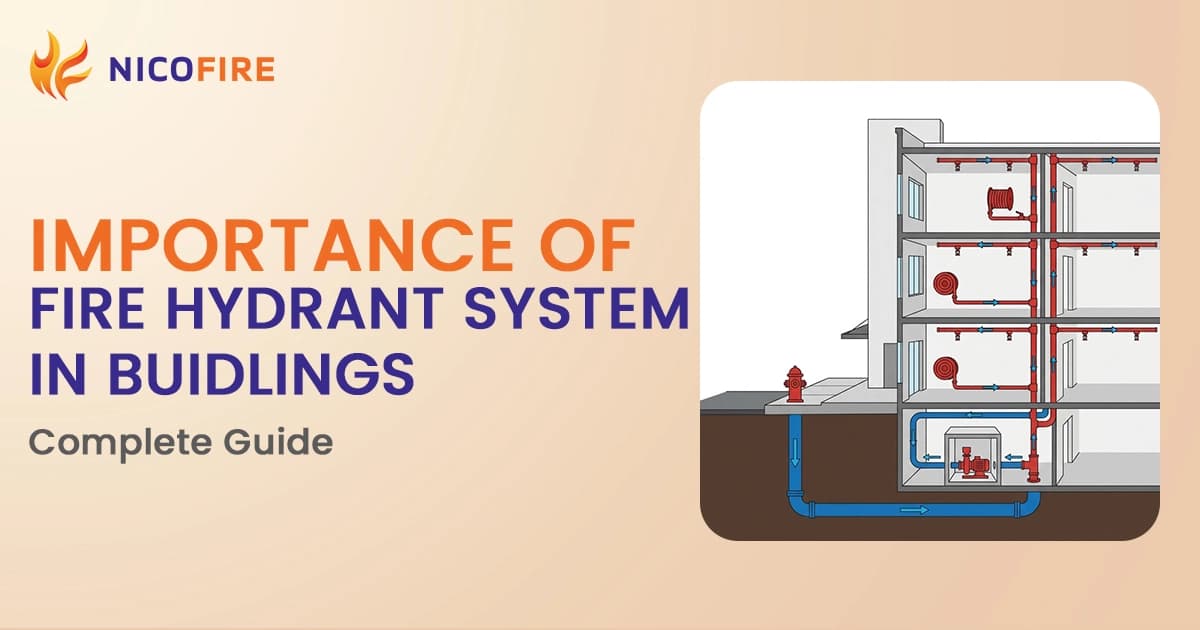
A fire hydrant system is a network of pipes, valves, and outlets installed inside or outside a building. It supplies water at high pressure so firefighters or trained staff can put out a fire quickly.
Think of it like a built-in water supply that is always ready for emergencies. Instead of waiting for a fire truck to arrive and connect to a distant water source, people inside the building can use the hydrant system right away.
In simple words, it is a lifeline that brings water exactly where it is needed, exactly when it is needed.
Why Fire Hydrant Systems Matter So Much in Nepal
Nepal's cities are growing fast. Kathmandu, Pokhara, Biratnagar, and other urban areas now have tall buildings, crowded markets, and narrow streets. This growth brings new fire safety challenges.
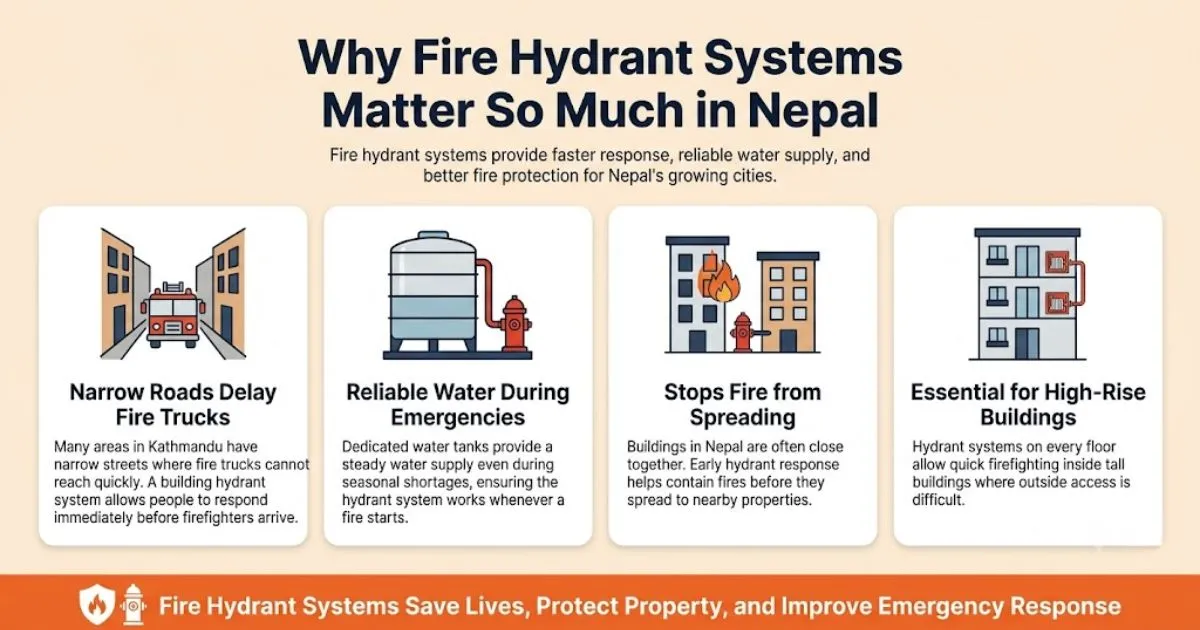
Here is why fire hydrant systems are especially important in the Nepali context:
1. Narrow roads make fire truck access difficult
Many areas in Kathmandu Valley, like old parts of Ason, Newroad, or Patan, have narrow lanes. Fire trucks often cannot reach the exact spot of the fire quickly. A hydrant system inside the building means people don't have to wait for outside help to start fighting the fire.
2. Water shortage during emergencies
Nepal often faces water shortages, especially in dry seasons. A hydrant system with its own water tank ensures that water is available exactly when a fire starts, without depending on the city's water supply at that moment.
3. Rapid, unplanned urban construction
Many buildings in Nepal are built close together, sometimes without following proper fire safety codes. This makes it easier for fire to spread from one building to the next. A working hydrant system can stop a small fire before it becomes a disaster for the whole neighborhood.
4. Growing number of high-rise buildings
Kathmandu and other cities now have more multi-story apartments, hotels, and office buildings than ever before. Fires in tall buildings are harder to control from outside. Hydrant systems installed on each floor make it possible to fight fire at the source, on any floor, without delay.
Also Read: Importance of CCTV Camera in Public Places
How a Fire Hydrant System Works
You don't need to be an engineer to understand this. Here is a simple explanation of how it works:
Water source – A large water tank (often on the rooftop or underground) stores water only for firefighting use.
Pump system – When a fire is detected, a pump pushes water through the pipes at high pressure.
Pipes and risers – These carry water up through the building to every floor.
Hydrant outlets – These are the points where a hose can be connected to release water on the fire.
Hose and nozzle – Staff or firefighters connect a hose to the outlet and direct water onto the flames.
This entire system is designed to work fast, so that a fire can be controlled within the first few critical minutes.
For a detailed explanation, read our complete guide on how a fire hydrant system works.
Types of Fire Hydrant Systems Used in Buildings
Type | Where It Is Used | Key Feature |
Wet riser system | Buildings taller than 15 meters | Pipes are always filled with water, ready for instant use |
Dry riser system | Lower buildings or where freezing is a risk | Pipes are empty; water is pumped in only during a fire |
Outdoor hydrant system | Factories, large compounds, malls | Hydrants placed outside for fire trucks to connect easily |
Combined system | Hospitals, hotels, large complexes | Uses both indoor and outdoor hydrants for full coverage |
Most modern buildings in Nepal, especially hospitals, hotels, and shopping complexes, are now required to install a wet riser system because it responds the fastest.
Where Fire Hydrant Systems Are Most Needed
While every building benefits from fire safety measures, some places need hydrant systems more urgently:
Hospitals – Patients cannot evacuate quickly, so fire must be controlled fast, right where it starts.
Hotels and guesthouses – Many guests, many floors, and unfamiliar exits make quick fire control essential.
Shopping malls and markets – Crowded spaces with lots of flammable materials like clothes, plastic, and packaging.
Schools and colleges – Large numbers of children and students need extra protection.
Apartments and residential towers – Many families living close together increase the risk of fire spreading.
Factories and warehouses – Chemicals, machinery, and stored goods can catch fire quickly and burn fast.
Government and commercial offices – Important documents, equipment, and large numbers of staff are at risk.
If you live or work in any of these types of buildings, it is worth checking whether a hydrant system is installed and working.
Key Benefits of Having a Fire Hydrant System
A fire can spread within minutes, causing serious damage and putting lives at risk. A fire hydrant system gives you a reliable water supply to deal with the fire as quickly as possible. It also makes it easier for firefighters to control the situation when they arrive. Here are some of the main benefits of having a fire hydrant system.
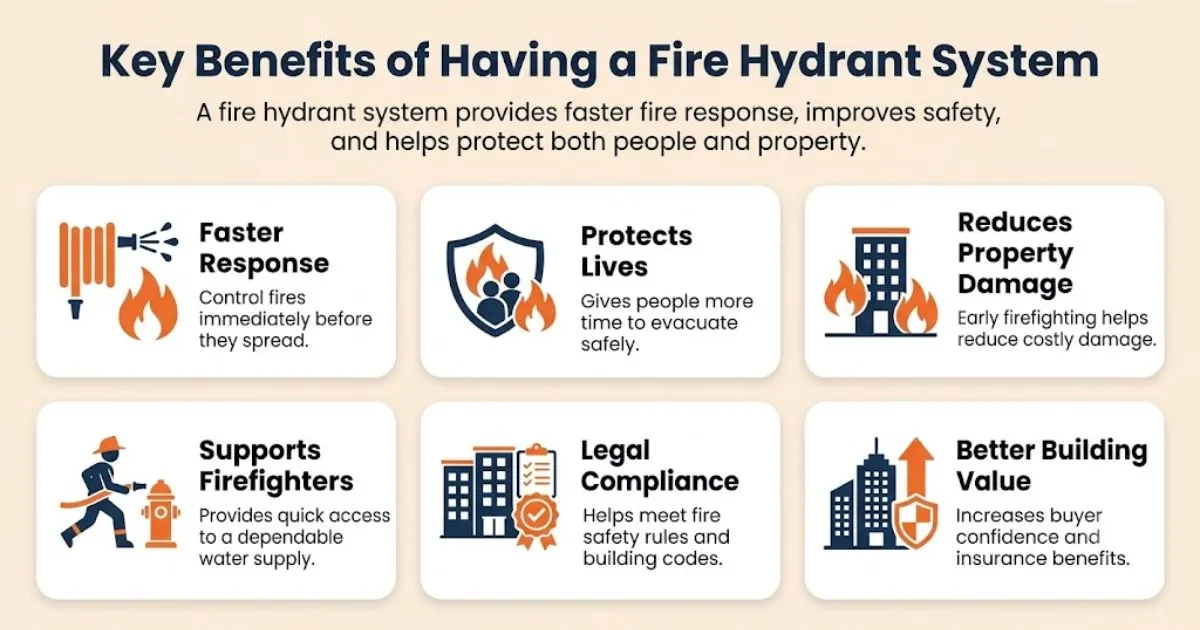
1. Faster response time
Instead of waiting for outside help, people inside the building can act immediately. This can be the difference between a small, controlled fire and a major disaster.
2. Protects lives first
The main goal of any hydrant system is to give people enough time to escape safely while the fire is being controlled.
3. Reduces property damage
A fire that is controlled early causes far less damage than one that spreads across floors or buildings.
4. Supports firefighters
When fire trucks arrive, they can connect directly to outdoor hydrants instead of searching for a distant water source. This saves precious time.
5. Required for legal compliance
In Nepal, buildings above a certain height or type (like hospitals, hotels, and malls) are legally required to install fire hydrant systems as per building codes and local municipality rules.
6. Increases insurance and resale value
Buildings with proper fire safety systems, including hydrants, often get better insurance terms and are more trusted by buyers or tenants.
Common Myths About Fire Hydrant Systems
Myth 1: "My building is small, so I don't need one." Even small buildings can catch fire quickly, especially if they have kitchens, electrical wiring, or shops on the ground floor. A basic hydrant system can still make a huge difference.
Myth 2: "Fire extinguishers are enough." Fire extinguishers are good for small fires in the very first moment. But once a fire starts spreading, only a hydrant system with continuous water supply can control it effectively.
Myth 3: "Once installed, it doesn't need attention." This is one of the most dangerous myths. A hydrant system that is not maintained can fail exactly when it is needed most.
Why Regular Maintenance Is So Important
Installing a fire hydrant system is only half the job. If it is not maintained properly, it may not work during an actual emergency. This has happened in real fire incidents, where hydrants were found dry, rusted, or blocked.
Here is a simple maintenance checklist building owners and managers should follow:
Check water tank levels every month
Test the fire pump regularly to make sure it starts properly
Inspect pipes and valves for leaks or rust
Check hose reels and nozzles for damage
Make sure hydrant outlets are not blocked by furniture or storage
Conduct a full system test at least once or twice a year
Keep a maintenance record with dates and findings
Train staff on how to use the hydrant system properly
A hydrant system is like a fire extinguisher for the whole building. It only works if it is ready when needed. Regular checks are not optional, they are essential.
If you're looking for complete fire safety equipment and maintenance services, contact Nicofire today.
Simple Tips for Building Owners in Nepal
If you own or manage a building, here are a few practical steps you can take:
Get your hydrant system inspected by a certified fire safety professional at least once a year.
Keep hydrant outlets visible and unblocked at all times, especially in staircases and corridors.
Train at least a few staff members on how to operate the hydrant system safely.
Keep the water tank full, especially during the dry season when city water supply may be unreliable.
Display clear signage so that hydrant points are easy to find during an emergency.
Coordinate with your local fire department so they know your building's layout and hydrant locations in advance.
These small steps do not cost much, but they can make a huge difference when a real fire happens.
Conclusion
Fire does not wait for anyone. It spreads fast, and every second matters. A fire hydrant system gives buildings in Nepal a real chance to fight fire early, protect lives, and reduce damage before it gets out of hand.
Whether you live in an apartment, run a business, or manage a hospital, understanding and maintaining your fire hydrant system is not just a legal requirement. It is a responsibility toward the safety of everyone inside the building.
A little attention today can prevent a major loss tomorrow.
Frequently Asked Questions
A fire hydrant system is a fire safety system that supplies water during a fire to help control large fires in buildings.
It helps control fire quickly, protects people, and reduces damage to buildings and property during fire emergencies.
Yes, fire hydrant systems are required in many buildings in Nepal, especially apartments, offices, hospitals, schools, and industries.
Fire extinguishers are used for small fires, while fire hydrant systems provide continuous water for large fires.
A fire hydrant system should be checked regularly to ensure pumps, pipes, and valves work properly during emergencies.
Fire hydrant systems are used by trained staff or firefighters during fire emergencies.
Comments
No comments yet.
Be the first to share your thoughts.