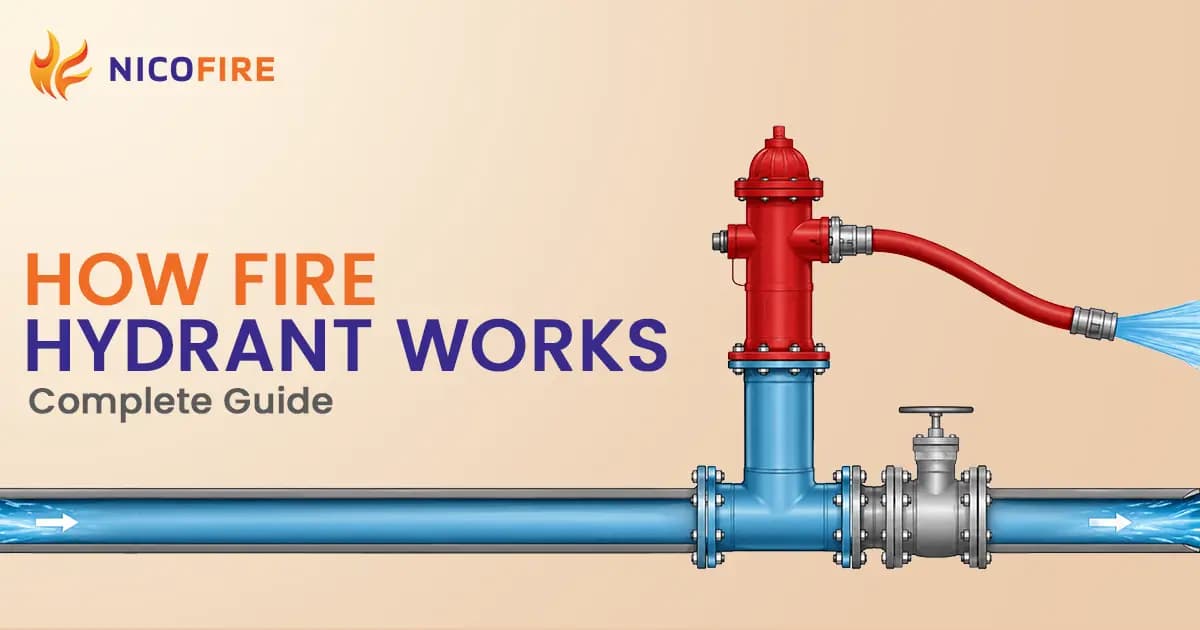
A fire can spread within minutes and cause serious damage to people and property if it is not controlled quickly. A fire hydrant system helps firefighters get a steady supply of water during an emergency, allowing them to control the fire faster and reduce the risk of further damage.
In this guide, you will learn what a fire hydrant system is, how it works, its main parts, different types, where it is used, and why it is an important part of fire safety.
Table of Contents
What is a Fire Hydrant System?
A fire hydrant system is a water system made to help stop fires and keep people safe. It connects a big water source to fire hydrants that are placed in many places such as roads, near homes, offices, schools, factories, and large buildings. This system has water pipes under the ground that carry water, valves that help turn the water on and off, pumps that push water strongly, and water tanks that store water for emergency use. The main work of a fire hydrant system is to give a large amount of water when a fire starts. In Nepal, fire hydrant systems are used in cities, housing areas, industrial places, and business buildings where fire can spread fast if water is not available on time.
When a fire happens, firefighters go to the nearest fire hydrant to get water quickly. They connect their water hose to the hydrant and slowly open it. After opening the hydrant, water comes out with strong force and flows into the hose. This water keeps coming without stopping while the hydrant is open. Because fire hydrants are connected to big water pipes or large water tanks, firefighters can use water for a long time. This helps them put out the fire faster, stop the fire from spreading, and protect people, houses, and nearby buildings from damage.
Parts of a Fire Hydrant
Outside Parts
The outside parts of a fire hydrant are the parts that everyone can see on roadsides, near buildings, or inside large open areas. These include the main body of the hydrant, the water outlets on the sides, the protective caps, and the top nut or valve used to open the hydrant. During a fire, firefighters first remove the caps from the outlets. After that, they tightly fix their fire hoses to these outlets so water does not leak. These parts are made from strong metal so they do not break easily during emergencies. Fire hydrants are usually painted in bright colors like red or yellow, and sometimes have reflective strips. This helps firefighters spot them quickly at night, in rain, or when smoke is everywhere.
Inside Parts That Control Water
Inside the fire hydrant, there are important parts that control how water flows. The hydrant is connected to a big water pipe that runs underground. Inside, there is a valve that stays closed when the hydrant is not in use. This valve stops water from coming out and prevents leaks under the ground. When firefighters open the hydrant, the valve slowly opens and allows water to move up from the underground pipe and out through the outlets. This design helps control water pressure so it does not damage hoses. It also keeps the water clean and ready to use when needed.
Fire hydrants also use extra parts that help firefighters work faster and safer. Hose couplings help connect hoses tightly to the hydrant. Nozzles are fixed at the end of hoses to control how water comes out, such as strong straight water or wide spray. Some hydrants have simple signs or markers nearby that show their location and how much water they can supply. These details may look small, but they help firefighters choose the right hydrant quickly. All these parts together make sure water reaches the fire without delay and helps control the fire effectively.
Types of Fire Hydrant Systems
1. Wet Barrel Hydrants
Wet barrel hydrants are used in places where the weather is not very cold and water does not freeze. In this type of hydrant, water stays inside the hydrant all the time. Because of this, firefighters can get water immediately when they open the hydrant. There is no waiting time, which helps save precious minutes during a fire. Wet barrel hydrants are easy to use and simple in design. In many cities and towns of Nepal, where the climate is mostly mild, these hydrants are very useful for roads, residential areas, and commercial places. They help firefighters act fast and control fires before they spread.
2. Dry Barrel Hydrants
Dry barrel hydrants are made for cold areas where water can freeze easily. In this system, water does not stay inside the hydrant body. Instead, it stays below ground level in the main water pipe. When firefighters open the hydrant, water comes up from below and flows out. After the hydrant is closed, the water inside drains out automatically. This helps stop water from freezing and damaging the hydrant. Dry barrel hydrants are commonly used in colder regions and higher-altitude areas. This design keeps the hydrant safe, working properly, and ready to use even in cold weather.
3. Internal and Special Hydrant Systems
Apart from street hydrants, many big buildings have their own fire hydrant systems inside. These are usually placed inside staircases, corridors, or near exits. They include hydrant cabinets, landing valves, and hose reels. These systems allow people inside the building or firefighters to get water quickly without going outside. Internal hydrant systems are very helpful in apartments, hospitals, malls, factories, and office buildings. They provide quick water access, reduce fire spread inside the building, and support firefighters during rescue and fire control operations.
How a Fire Hydrant System Works
1. Ready Water Source
A fire hydrant system is always connected to a ready water source so there is no delay during a fire. This water source can be city water supply lines, underground water tanks, overhead tanks, or special fire water storage tanks. When there is no fire, water stays safely inside these pipes and tanks, and all valves remain closed. The system stays in standby mode all the time. This means water is already prepared and does not need to be collected after a fire starts. This readiness is very important because even a few minutes can make a big difference during a fire emergency.
2. Underground Water Pipes
Water from the main source moves through strong pipes that are laid under the ground. These pipes connect the water source to fire hydrants installed in different locations. The pipes are large so they can carry a large amount of water at the same time. Being underground protects them from damage, weather, and daily activity on the roads. This hidden pipe network makes sure water can reach any fire hydrant quickly and smoothly when firefighters need it.
3. Opening the Hydrant
When a fire breaks out, firefighters go to the nearest fire hydrant and open it using a special valve key. Opening the hydrant also opens the valve inside it. As soon as the valve opens, water starts flowing from the underground pipe into the hydrant. From the hydrant, water moves directly into the fire hose connected by firefighters. This process happens very fast and helps firefighters start fighting the fire without wasting time.
4. Water Pressure Support
Sometimes the normal water pressure is not enough, especially for tall buildings or large fire areas. In such cases, fire pumps are used to increase water pressure. These pumps push water with more force so it can reach higher floors and far areas easily. Pumps help keep the water flow strong and steady during the entire firefighting operation. Without pumps, it can be difficult to control big fires.
5. Continuous Water Flow
Once the fire hydrant is opened, water keeps flowing as long as firefighters need it. For small fires, one hydrant may be enough. For bigger fires, firefighters can connect hoses to more than one hydrant at the same time. Because the system is connected to large water pipes and storage tanks, water supply does not stop suddenly. This continuous water flow helps firefighters control the fire, stop it from spreading, and protect people, homes, and nearby buildings.
Maintenance, Inspection, and Testing
1. Why Regular Maintenance Is Important
Fire hydrants may look strong from the outside, but they need regular care to work properly during a fire. If a hydrant fails at the wrong time, firefighters may not get water quickly, which can lead to bigger damage and danger to lives. Regular maintenance helps make sure the hydrant valve opens and closes easily, caps are not stuck or broken, and there are no leaks inside or outside the hydrant. It also helps remove rust, mud, or waste that can block water flow. These small checks may look simple, but they play a big role in keeping people, buildings, and firefighters safe during emergencies.
2. What Is Checked During Inspection
Fire hydrant inspection means checking every important part of the hydrant to make sure it is ready to use. First, inspectors check if the hydrant is clearly visible and not blocked by parked vehicles, garbage, plants, or construction materials. Then they look at the body, caps, outlets, and paint condition to see if there is any damage or missing part. After that, the hydrant is opened to check if water flows smoothly and stops properly when closed. Inside parts are also checked to ensure there is no blockage or damage. These regular inspections help find problems early and keep the hydrant working all year round.
3. Flow Testing to Check Water Strength
Flow testing is done to check how much water a hydrant can give and how strong the water pressure is. During this test, the hydrant is opened fully and the water flow is measured. This helps find issues like low pressure, weak supply, or blocked underground pipes. If problems are found, they can be fixed before a real fire happens. Regular flow testing ensures hydrants can give enough water for firefighting and helps authorities plan repairs or upgrades where needed.
4. Following Safety Rules and Standards
Fire hydrant systems must follow fire safety rules and building laws set by local authorities. These rules explain where hydrants should be placed, how often they should be checked, and how they should be maintained. Following these safety standards makes sure the hydrant system works properly and safely. It also helps meet insurance needs and legal safety requirements. When hydrants follow proper rules and standards, communities can feel more confident that their fire safety system will work when it is needed most.
Conclusion
Fire hydrant systems are a very important part of fire safety and play a big role in protecting people, homes, and buildings every day. Even though we may not notice them, they are always ready to provide water quickly when a fire happens. Their fast and reliable water supply helps firefighters control fires early and reduce damage. To keep these systems working properly, everyone has a role to play. Authorities must maintain and inspect hydrants regularly, while the public should keep them clear, avoid damage, and report any problems. With regular care, better awareness, and shared responsibility, fire hydrant systems will continue to keep communities across Nepal safer now and in the future.