Every 15 minutes, a fire breaks out somewhere in Nepal — in homes, kitchens, factories, and on roads. In most cases, the fire was small enough to be controlled. Yet lives and property are lost because people nearby either did not have a fire extinguisher or, more commonly, did not know how to use one correctly.
Knowing how to use a fire extinguisher is one of the most important life-safety skills you can have. It takes less than 60 seconds to learn, and it could save your home, your office, and most importantly, the people you care about.
In this guide, Nicofire — Nepal’s trusted fire safety equipment provider — walks you through exactly how to use a fire extinguisher step by step using the internationally recognised PASS method. We also cover which extinguisher type to use, common mistakes to avoid, what to do after a fire, and how to keep your extinguisher in working order.
Table of Contents
When Should You Use a Fire Extinguisher?
Before reaching for the extinguisher, take five seconds to assess the situation. Using an extinguisher at the wrong time can put you in danger. Only attempt to fight a fire yourself when ALL of the following are true:
The fire is small and contained to a single object or surface (e.g., a pan, a bin, or a small piece of furniture).
Someone has already alerted others in the building.
Someone has already called the Nepal fire brigade at 101.
You have a clear exit path behind you so you can escape if needed.
You are not breathing toxic smoke — keep your back to the exit and stay low if there is smoke.
You have the correct type of fire extinguisher available and it is fully charged.
When to evacuate instead: The fire is growing rapidly or has spread beyond its starting point.There is heavy smoke in the room, making it hard to breathe or see. you do not have the correct extinguisher for that type of fire. you have never been trained to use a fire extinguisher. Get out, close doors behind you, and call 101 from a safe location. |
Know Your Extinguisher: Types and Fire Classes
Not all fire extinguishers are the same. Using the wrong type on the wrong fire can make things dramatically worse. For example, using a water extinguisher on an electrical fire can cause electrocution. The table below explains each type and where it is used:
Type | Class | Best For | Nicofire Product |
ABC Powder | A, B, C | Home, office, vehicles, workshops | ABC Fire Extinguisher |
CO2 Gas | B, C | Electrical fires, flammable liquids | CO2 Fire Extinguisher |
Clean Agent | A, B, C | Server rooms, sensitive electronics | Clean Agent Extinguisher |
Foam | A, B | Flammable liquids, petrol, paint | Foam Fire Extinguisher |
Lithium-ion | Specialty | Electric vehicles, Li-ion batteries | Lithium-ion Extinguisher |
For most homes and offices in Nepal, an ABC dry chemical powder fire extinguisher is the best all-purpose choice because it handles wood, paper, flammable liquids, and electrical equipment. For server rooms, restaurants, and automotive workshops, CO2 or clean agent extinguishers are more appropriate.
How to Use a Fire Extinguisher: The PASS Method
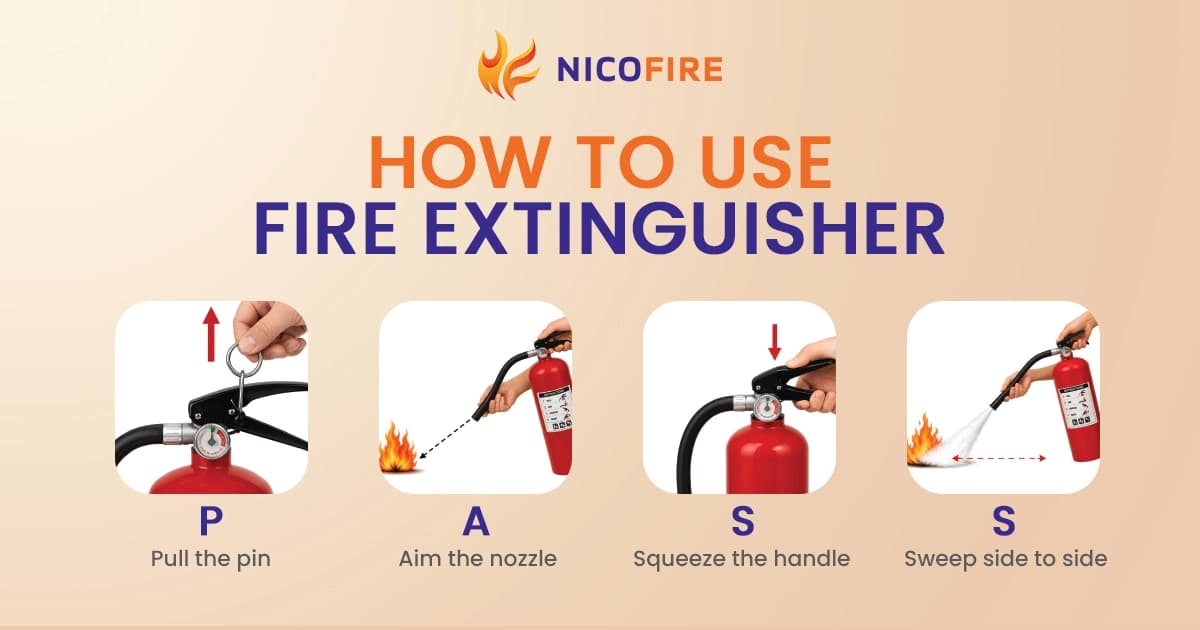
The PASS method is the globally accepted four-step technique taught by fire departments worldwide, including those in Nepal. Once you have confirmed it is safe to act, follow these four steps precisely:
Step | Action | What to Do |
1 — P | Pull the Pin | Hold nozzle away from you, remove the safety pin to unlock the handle. |
2 — A | Aim Low | Point the nozzle or hose at the base of the fire, not the flames. |
3 — S | Squeeze the Lever | Press the lever slowly and evenly to release the extinguishing agent. |
4 — S | Sweep Side to Side | Move the nozzle in a steady sweeping motion until the fire is fully out. |
Step 1 — Pull the Pin
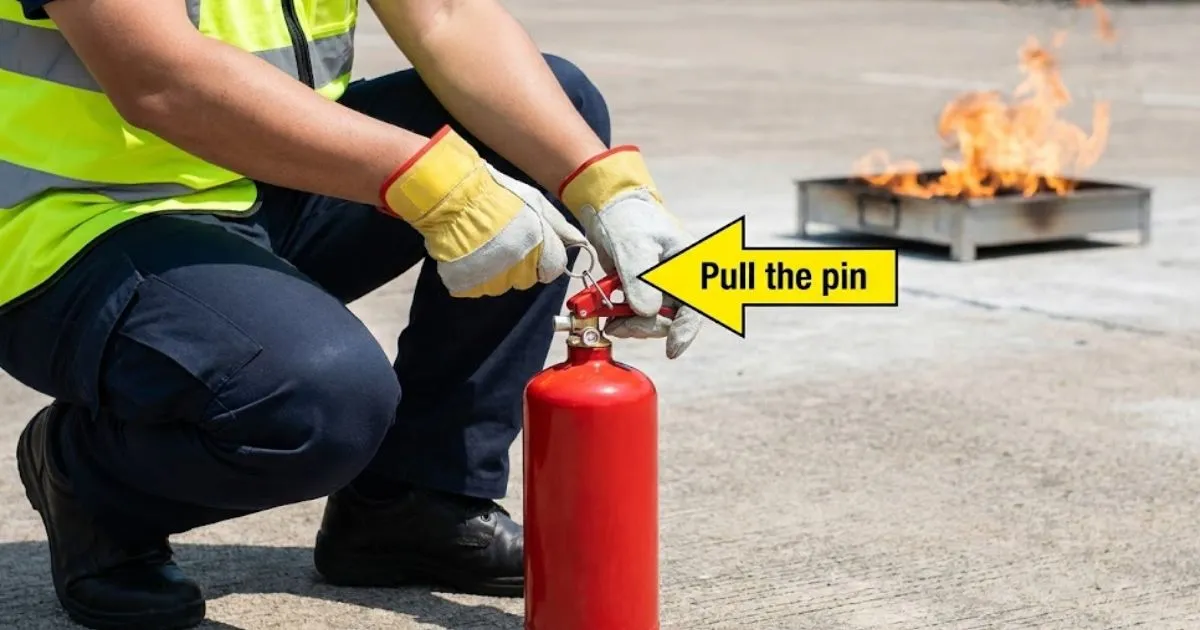
The first step in using a fire extinguisher is pulling the pin. This pin acts like a safety lock. It keeps the extinguisher from spraying accidentally when someone is carrying or storing it. When you remove the pin, the extinguisher becomes active and ready to use. This step is important because you cannot squeeze the handle or release the extinguishing agent until the pin is out. Taking a few seconds to pull the pin properly helps you stay calm and prepares you for the next steps.
Step 2 — Aim the Nozzle
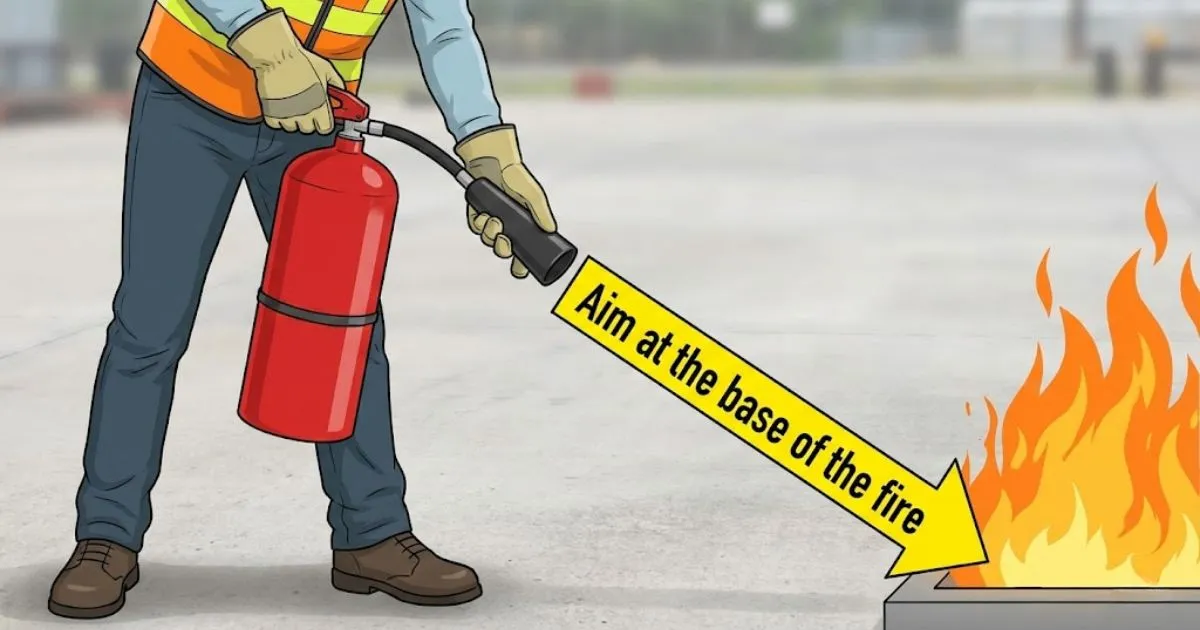
The second step of the PASS method is aiming the nozzle. This step is very important because where you aim decides how effectively you can put out the fire. You should always aim at the base of the fire and not at the flames. The base is the point where the fire is actually burning and where the fuel is located. When you aim low at the source, the extinguishing agent can reach the part that keeps the fire alive. This helps you stop the fire faster and prevents it from growing bigger.
Step 3 — Squeeze the Handle
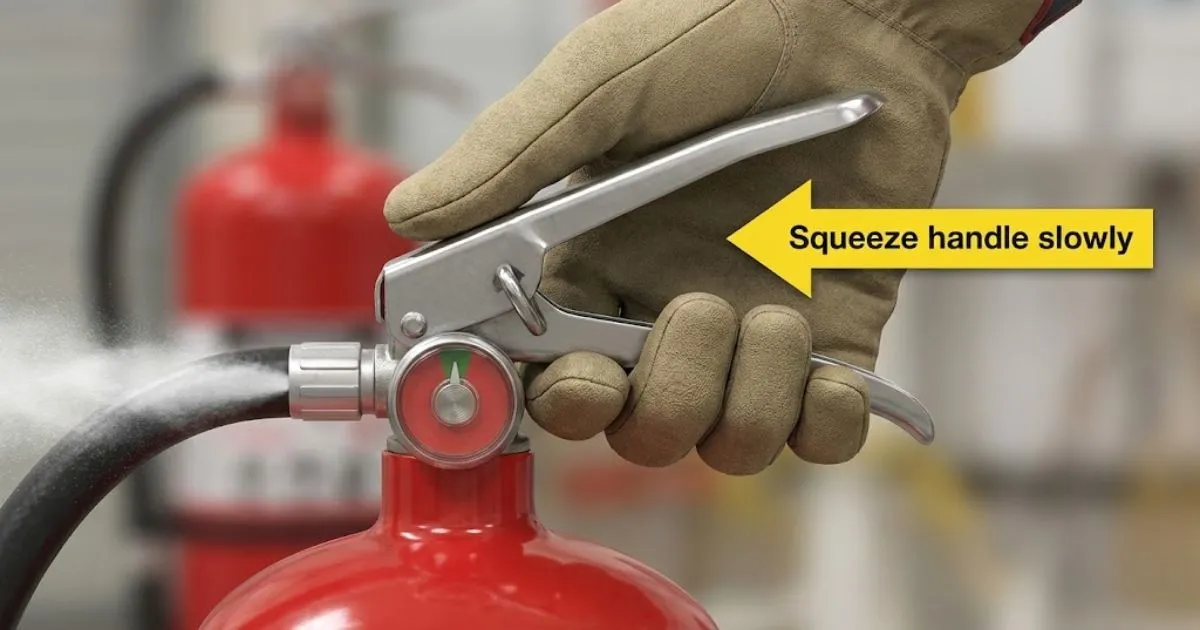
The third step in the PASS method is squeezing the handle. Once you have aimed the nozzle at the base of the fire, you need to press the handle to release the extinguishing agent. This is the moment when the extinguisher starts working. When you squeeze the handle, the pressure inside the extinguisher forces the agent out through the nozzle. The spray then reaches the fire and begins to cool it down, remove oxygen, or stop the burning reaction. This step is important because the extinguisher will not release anything until the handle is pressed firmly.
Step 4 — Sweep Side to Side
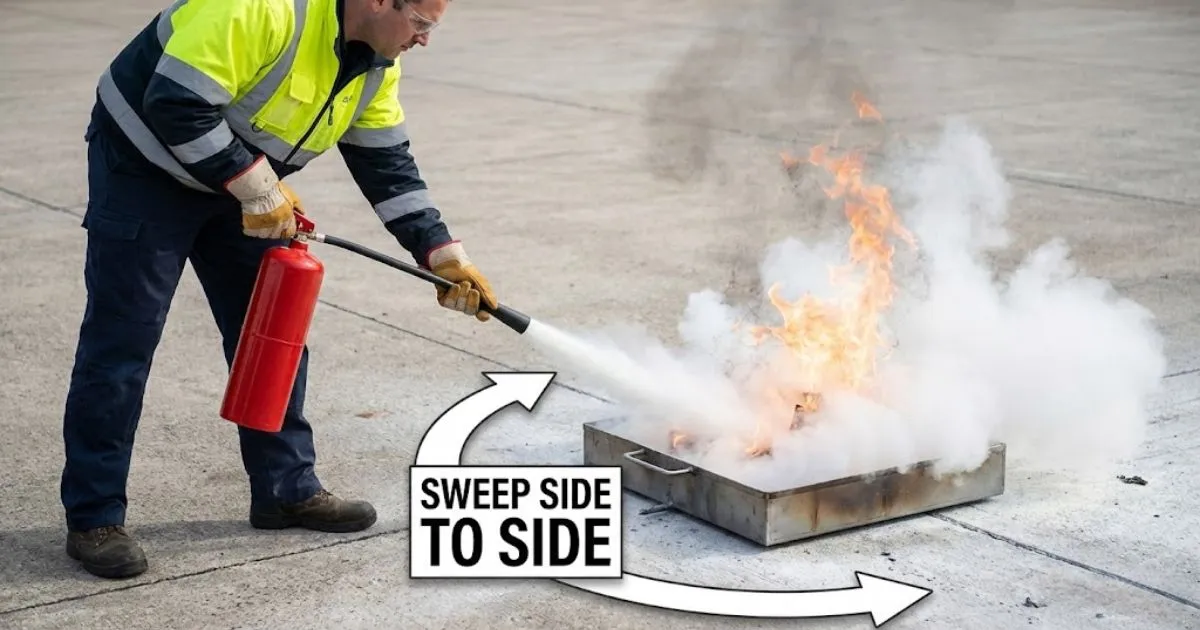
After you start spraying the extinguisher, slowly move the nozzle from left to right across the bottom of the fire. Do not hold the nozzle in one place, because the fire can burn in many small spots. Moving the nozzle helps the extinguishing agent spread across the whole fire. This side-to-side motion allows the spray to cover more area, reach the burning material properly, and reduce the flames more quickly. A steady and calm movement helps you stay in control and makes the extinguisher work better.
Expert Tip: Begin discharging the extinguisher from 6 to 8 feet (2 to 2.5 metres) away from the fire. As the fire reduces, you can step a little closer for more accuracy.Never get closer than 3 feet. The discharge pressure can scatter burning material. Most portable fire extinguishers have a discharge time of only 10 to 20 seconds — use every second wisely. |
7 Common Mistakes People Make with Fire Extinguishers
Even people who know the PASS method make critical errors under pressure. These mistakes can cause the fire to spread or put the user at risk:
Aiming at the flames instead of the base — the most common mistake. Fire is fuelled from below; always aim at the source, not the visible flame.
Not pulling the pin fully — if the pin is not completely removed, the lever will not depress and no agent will discharge. Pull firmly until the pin comes out completely.
Using the wrong extinguisher type — using a water extinguisher on an oil fire causes a fire explosion. Using a water extinguisher on a live electrical panel risks fatal electrocution.
Standing too close — starting too close reduces your ability to sweep the nozzle effectively and puts you at risk from heat, debris, and discharge pressure.
Using an expired or undercharged extinguisher — a fire extinguisher with a low or zero pressure reading on its gauge is unreliable. Inspect the gauge monthly and get it refilled after every use.
Turning your back after the fire appears out — fire can reignite from residual heat or embers. Watch the extinguished area for at least 60 seconds.
Not practicing before an emergency — panic reduces effectiveness. Consider attending a fire extinguisher training session with Nicofire so that using the PASS method becomes instinctive.
How to Use a Fire Extinguisher in Specific Situations
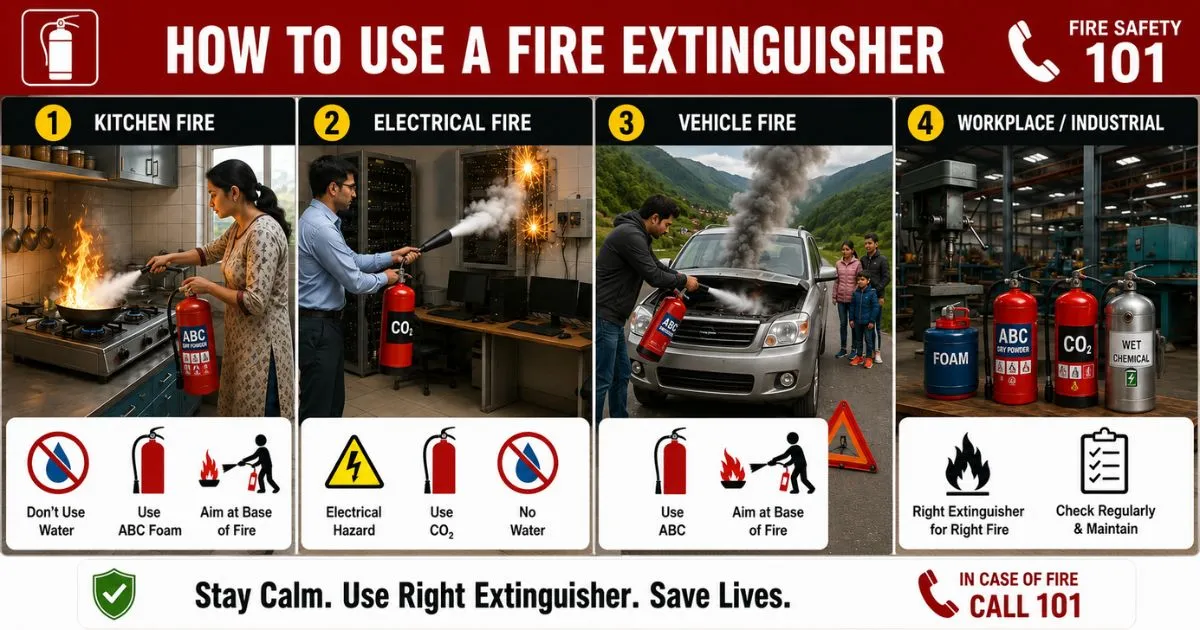
1. Kitchen Fires (Nepal’s Most Common Fire Location)
Kitchen fires — usually caused by LPG gas, overheated cooking oil, or an unattended stove — are the leading cause of home fires in Nepal. For a pan fire involving oil or grease, use a foam or dry powder (ABC) extinguisher and cover the pan if possible. Never use water on an oil fire. If the fire involves your LPG cylinder, turn off the gas supply if it is safe to do so, then use a CO2 or ABC extinguisher on any residual fire. If the cylinder itself is on fire, evacuate immediately and call 101.
2. Office and Electrical Equipment Fires
Fires involving computers, wiring, server rooms, or electrical panels require a CO2 or clean agent extinguisher. Both are non-conductive, meaning they will not cause electrocution, and both leave no residue — which is critical for protecting sensitive equipment. An ABC dry powder extinguisher can also be used on electrical fires up to 1,000 volts, but the powder residue will damage electronic equipment beyond repair. Before using any extinguisher near electrical equipment, switch off the power if it is safe to do so.
3. Vehicle Fires
Keep a 1 kg or 2 kg ABC dry powder extinguisher in your car, truck, or bus. In a vehicle fire, pull over safely, turn off the engine, get all passengers out, and keep a safe distance. Only open the bonnet slightly to introduce the nozzle — opening it fully feeds the fire with oxygen. Aim at the base of the fire through the gap and sweep thoroughly.
4. Workshops and Industrial Areas
Workshops dealing with flammable liquids such as paint, petrol, and solvents need Class B-rated extinguishers. ABC powder or foam extinguishers are well-suited for these environments. Lithium-ion battery fires in factories, electric vehicles, and solar storage units require specialised lithium-ion fire extinguishers — standard extinguishers are not effective on these fires.
What to Do After Using a Fire Extinguisher
Most guides stop at putting out the fire — but what happens next is equally important for your safety and for the condition of your extinguisher:
Document the incident — note the date, cause, and type of fire for insurance purposes and for your workplace fire log.
Ventilate the area — ABC dry powder and CO2 can leave chemical residue and displace oxygen. Open windows and doors and do not re-enter until the air is clear.
Call the fire brigade (101) even if the fire is out — fire fighters need to inspect the area for hidden heat sources and structural damage, especially after a serious fire.
Do not reuse the extinguisher — once a fire extinguisher has been discharged even partially, it must be refilled or replaced before it can be relied upon again. A partially discharged extinguisher may fail to function during the next emergency.
Contact Nicofire for refilling — Nicofire offers professional fire extinguisher refilling and maintenance services across Nepal. A certified technician will recharge your extinguisher, replace the safety pin and tamper seal, and certify it for further use.
Conclusion
Understanding the PASS method and knowing how to use a fire extinguisher can help you stop a small fire before it becomes big and dangerous. Simple habits like checking your extinguisher, keeping your home tidy, and staying calm during an emergency can make a big difference. Anyone can learn these steps, and they are easy to remember when you need them the most. Fire safety is not difficult; it just needs a little practice and awareness. To stay even safer, explore more of our easy fire safety guides and learn helpful tips that can keep your home and family protected every day.
Frequently Asked Questions
PASS stands for Pull, Aim, Squeeze, and Sweep. These are the four simple steps to use a fire extinguisher safely during a small fire emergency.
An ABC fire extinguisher is best for homes because it works on common fires like wood, paper, electrical equipment, and kitchen-related fires.
Keep fire extinguishers in high-risk areas like the kitchen, near electrical panels, living rooms, and garages, where fires are more likely to start.
Check your extinguisher once a month for pressure and damage. Most extinguishers last 5–15 years, but they should be serviced regularly.
Some fire extinguishers can be refilled and recharged after use, while others are disposable. Always check the label and refill immediately after any discharge.
Ventilate the room, keep watching the area for re-ignition, call the fire brigade at 101 even if the fire is out, and have your extinguisher professionally refilled before placing it back in service. A partially used extinguisher is unreliable.
Check the pressure gauge on the front of the extinguisher. If the needle is pointing to the green zone, the unit is charged and ready. If it points to the red zone — either too low or too high — the extinguisher needs servicing. Also check that the safety pin and tamper seal are intact.
Start approximately 6 to 8 feet (2 to 2.5 metres) away from the fire. This gives you a safe buffer from heat and gives the extinguishing agent enough range to reach the base of the fire. As the fire weakens, you can step slightly closer if needed.
Comments
No comments yet.
Be the first to share your thoughts.