Fire does not ask for permission before it starts. One moment everything is normal, and the next moment, smoke is filling the room. This is why every home, office, school, hospital, and factory in Nepal needs at least a basic understanding of fire safety.
But here is something many people don't know. Not all fires are the same. A fire caused by burning wood is very different from a fire caused by cooking oil or an electrical short circuit. If you use the wrong method to put out a fire, you may not stop it. In some cases, you can actually make it worse.
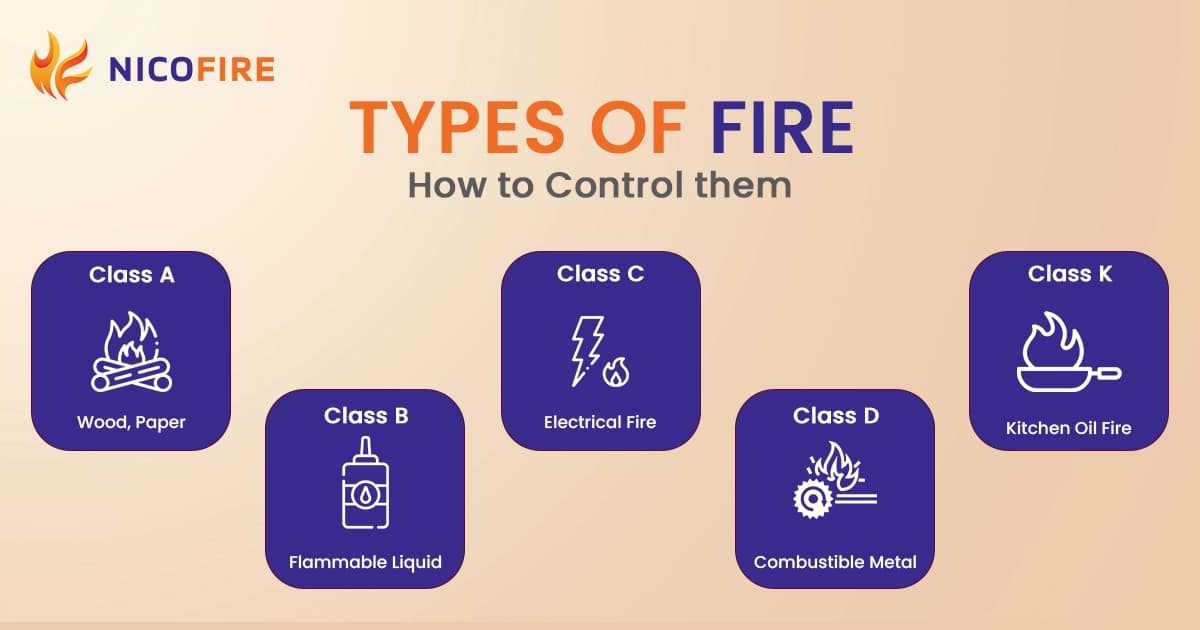
That is why fire safety experts divide fires into different classes: A, B, C, D, and K. Each class needs a different approach. In this guide, we will explain each fire class, along with the right way to control it.
Table of Contents
Why It Matters to Know Fire Classes
Imagine a small fire starts in your kitchen because of hot cooking oil. If you throw water on it, the fire can explode outward instead of going out. This happens often, and it causes serious injuries every year.
Now imagine a fire starts near your computer or electrical switchboard. If you use a water-based extinguisher, you risk getting an electric shock, and the fire may spread through the wiring.
Knowing the fire class helps you pick the right tool in seconds. This small piece of knowledge can protect your life, your family, your employees, and your property. It is not just theory. It is a skill everyone should have.
Understanding the Fire Triangle First
Before we talk about fire classes, let's understand how a fire actually starts. Every fire needs three things at the same time. This is called the fire triangle.
Heat – A source of heat or a spark to start the burning process.
Fuel – Something that can burn, like wood, paper, gas, oil, or cloth.
Oxygen – Fire needs oxygen from the air to keep burning.
If you remove even one of these three things, the fire will go out. This is exactly how fire extinguishers work. Water cools down the heat. Foam and CO2 block oxygen. Dry powder interrupts the chemical reaction. Understanding this simple idea makes it much easier to understand why different fires need different extinguishers.
Now let's look at each fire class in detail.
Types of Fires
Fires are grouped into five main classes based on what is burning. Each class behaves differently, so each one needs its own way of being controlled. Here is a simple breakdown of all five.
Class A Fires – Common Combustible Materials
Class A fires are the most common type of fire. These involve ordinary materials that we see and use every day.
What it is: Class A fire happens when everyday solid materials catch fire and burn.
Common causes:
Carelessly discarded cigarettes
Faulty electrical wiring near furniture or curtains
Cooking accidents that spread to nearby paper or cloth
Candles left unattended, common during load-shedding in Nepal
Bonfires or waste burning that goes out of control
Real-life examples: Think of a house fire that starts from a curtain catching fire near a candle. Or a shop fire where cardboard boxes and clothes catch flame. Even a school fire from paper and wooden furniture falls under this class.
Fire risks: Class A fires spread quickly, especially in homes with wooden furniture, curtains, and paper. They produce thick smoke, which is often more dangerous than the fire itself because it can cause suffocation.
Best way to control it: Cool the fire down and cut off its fuel supply. Water is highly effective because it cools burning material quickly.
Suitable extinguisher: Water-type extinguishers work best. ABC Dry Powder extinguishers are also effective and are commonly found in homes and offices in Nepal.
Safety precautions: Keep flammable materials like paper and cloth away from heat sources. Never leave candles or stoves unattended. Install smoke detectors where possible, especially in bedrooms and kitchens.
Common mistake: People often try to put out large Class A fires using small amounts of water, which is not enough. Also, some people panic and use foam or CO2 extinguishers meant for other fire types, which are less effective on solid materials.
Class B Fires – Flammable Liquids
Class B fires involve liquids and gases that catch fire easily. These are common in workshops, factories, and fuel stations.
What it is: A fire that starts from flammable liquids or gases such as petrol, diesel, paint thinner, or cooking gas leaks.
Common causes:
Fuel spills near open flame or sparks
Gas cylinder leaks in kitchens or workshops
Paint and chemical storage areas with poor ventilation
Vehicle fuel leaks in garages
Real-life examples: A petrol pump fire caused by a spark near fuel vapor. A workshop fire from spilled diesel catching fire near welding sparks. A gas cylinder leak in a restaurant kitchen igniting suddenly.
Fire risks: These fires spread extremely fast because liquid fuel can flow and cover a large area quickly. They can also cause explosions if gas builds up in a closed space.
Best way to control it: Cut off the oxygen supply to smother the fire. Never use water, because it can spread the burning liquid further and make the fire bigger.
Suitable extinguisher: Foam extinguishers or CO2 extinguishers are the best choice. Dry powder extinguishers also work well for Class B fires.
Safety precautions: Store fuel and chemicals in proper containers, away from heat. Ensure good ventilation in areas where gas or fuel is used. Keep a fire extinguisher near fuel storage areas at all times.
Common mistake: Using water on a liquid fire is one of the most dangerous mistakes people make. Water is heavier than most fuels, so it sinks below the burning liquid and pushes it outward, spreading the fire instead of stopping it.
Class C Fires – Electrical Fires
Class C fires are extremely common in Nepal due to frequent electrical issues, old wiring, and overloaded sockets.
What it is: A fire that starts from electrical equipment or wiring that is still connected to a power source.
Common causes:
Overloaded power sockets and extension boards
Old or damaged wiring
Short circuits during power fluctuations
Faulty appliances like heaters, motors, or transformers
Real-life examples: An office fire that starts from an overheated extension board with too many devices plugged in. A factory fire caused by a short circuit in old machinery wiring. A home fire from a damaged switchboard.
Fire risks: Electrical fires can cause serious electric shocks if you touch the equipment or use water. They can also spread quickly through wiring systems hidden inside walls, making them hard to detect early.
Best way to control it: First, turn off the main power supply if it is safe to do so. Then use a non-conductive extinguishing method to cut off the fire's fuel or oxygen.
Suitable extinguisher: CO2 extinguishers are the safest choice because they don't conduct electricity and leave no residue on equipment. Dry powder extinguishers also work but can damage sensitive electronics.
Safety precautions: Never overload sockets. Get wiring checked regularly by a qualified electrician. Turn off electrical appliances when not in use, especially during the night.
Common mistake: The biggest and most dangerous mistake is using water on an electrical fire. Water conducts electricity, and this can cause a fatal shock to the person trying to put out the fire.
Class D Fires – Combustible Metals
Class D fires are rare in homes but important to know about if you work in a factory, workshop, or industrial setting.
What it is: A fire involving burning metals such as magnesium, aluminum powder, titanium, or sodium.
Common causes:
Metal dust or shavings catching fire during industrial processes
Overheating of metal machinery
Chemical reactions involving certain reactive metals
Real-life examples: A metal workshop fire caused by aluminum dust igniting during grinding work. A factory fire involving magnesium shavings that catch flame from a spark.
Fire risks: Metal fires burn at extremely high temperatures and can react violently with water, sometimes causing explosions. They are difficult to control without the right equipment.
Best way to control it: Special dry powder specifically designed for metal fires is used to smother the fire and stop the chemical reaction. Regular extinguishers are not effective here.
Suitable extinguisher: Only Class D specialized dry powder extinguishers should be used. These are usually found in factories and industrial units that work with metals.
Safety precautions: Store metal shavings and dust in dry, sealed containers away from heat sources. Train factory workers to identify and handle metal fire risks properly.
Common mistake: Using water or a regular ABC extinguisher on a metal fire is extremely dangerous, as it can cause the fire to react violently and spread further.
Class K Fires – Cooking Oils and Fats
Class K fires are common in kitchens, restaurants, hotels, and canteens across Nepal.
What it is: A fire involving cooking oils, fats, or grease, usually in kitchens with deep fryers or large cooking pots.
Common causes:
Overheated cooking oil left unattended
Grease buildup near stoves catching fire
Deep fryers used without proper temperature control
Real-life examples: A restaurant kitchen fire from a deep fryer left on too long. A hotel kitchen fire caused by grease buildup near the stove catching a spark.
Fire risks: Cooking oil fires burn at very high temperatures and can flare up suddenly. If water touches hot oil, it causes a violent explosion of flames, which can severely burn anyone nearby.
Best way to control it: Cool the fire and coat the burning oil to stop it from reacting with oxygen. A wet chemical extinguisher creates a soapy layer over the oil, sealing it off.
Suitable extinguisher: Wet chemical extinguishers are specifically designed for Class K fires and work best in commercial kitchens. A fire blanket can also work for smaller stovetop fires.
Safety precautions: Never leave hot oil unattended. Keep a lid or fire blanket near the cooking area. Regularly clean grease buildup around stoves and fryers.
Common mistake: Throwing water on a cooking oil fire is one of the most common and dangerous mistakes. It causes the oil to splash and can spread fire across the entire kitchen in seconds.
Why Using the Wrong Extinguisher Can Be Dangerous
Each fire class reacts differently to different substances. Water is great for Class A fires but dangerous for Class B, C, D, and K fires. CO2 is safe for electrical fires but not effective for large Class A fires involving furniture or paper.
Using the wrong extinguisher wastes precious time and can make the situation worse. This is why fire extinguishers are labeled clearly with the fire classes they are meant for, and it is important to check this label before using one.
Fire Class Comparison Tables
Fire Classes and Their Fuel Sources
Every fire class burns a different type of material. Knowing what fuels each class helps you spot the fire type quickly and react the right way.
Fire Class | Fuel Source |
Class A | Wood, paper, cloth, plastic, rubber |
Class B | Petrol, diesel, paint, gas, oil-based liquids |
Class C | Electrical wiring, appliances, machinery |
Class D | Metals like magnesium, aluminum, titanium |
Class K | Cooking oils, fats, and grease |
Recommended Fire Extinguisher for Each Fire Class
Once you know the fire class, choosing the right extinguisher becomes simple. Use this table as a quick reference during an emergency.
Fire Class | Recommended Extinguisher |
Class A | Water or ABC Dry Powder |
Class B | Foam or CO2 |
Class C | CO2 (non-conductive) |
Class D | Special Class D dry powder |
Class K | Wet Chemical |
Common Places Where Each Fire Class Occurs
Some fire classes are more likely in certain places than others. This can help you prepare the right extinguisher in advance based on where you live or work.
Fire Class | Common Locations |
Class A | Homes, offices, schools, hostels |
Class B | Fuel stations, garages, workshops |
Class C | Offices, factories, homes with wiring issues |
Class D | Metal factories, industrial workshops |
Class K | Restaurants, hotel kitchens, canteens |
What You Should Never Use on Each Fire Class
Using the wrong method on the wrong fire class can make things worse instead of better. Keep this table in mind so you never reach for the wrong tool.
Fire Class | Never Use |
Class A | Nothing major, but avoid CO2 for large fires |
Class B | Water |
Class C | Water or foam |
Class D | Water or regular ABC extinguisher |
Class K | Water |
Quick Guide to Fire Extinguisher Types
ABC Dry Powder: A versatile option that works on Class A, B, and C fires. Common in Nepali homes and offices.
Water Extinguisher: Best for Class A fires only. Do not use on electrical, liquid, or oil fires.
Foam Extinguisher: Works on Class A and Class B fires. Not suitable for electrical fires.
CO2 Extinguisher: Ideal for Class B and Class C fires. Leaves no residue, safe for electronics.
Wet Chemical Extinguisher: Designed specifically for Class K kitchen fires.
Class D Extinguisher: Specialized powder for metal fires, used mainly in industrial settings.
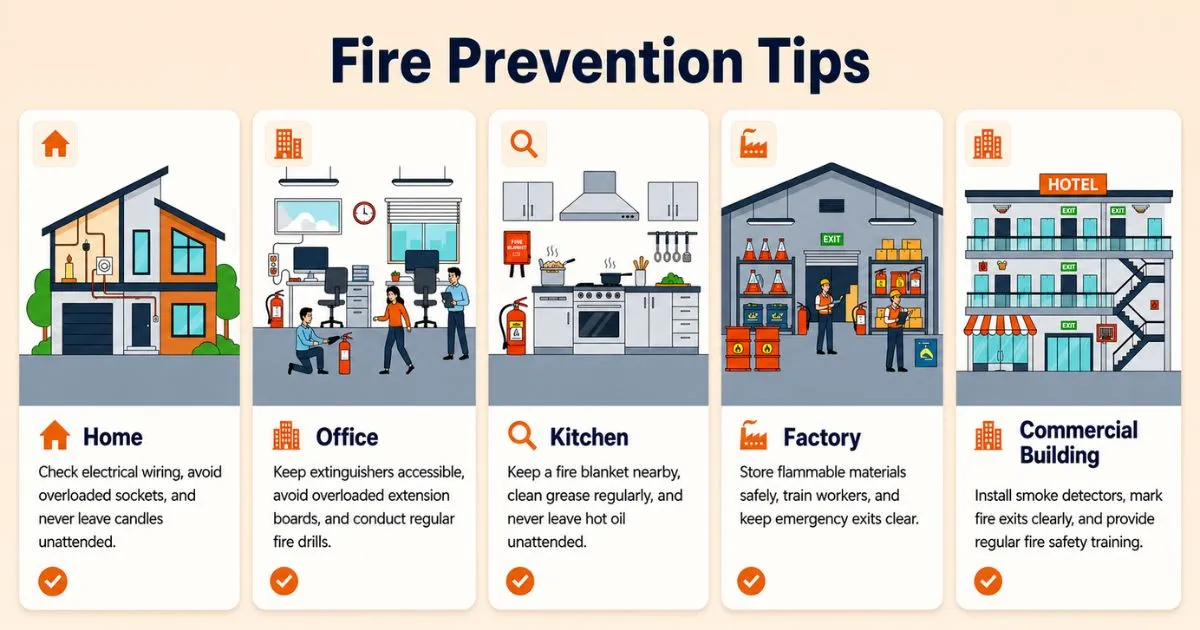
Fire Prevention Tips for Different Places
Fire risks are not the same everywhere. A home, an office, and a factory each face different dangers, so prevention needs to be tailored to the place. Here are basic tips for the most common places.
1. For Homes
Check your house wiring once in a while, especially if you live in an old house. Do not plug too many devices into one socket, as this can cause overheating. During load-shedding, many people use candles, so never leave a burning candle alone in a room. Also, keep matchboxes and lighters away from children.
2. For Offices
Every office should have at least one fire extinguisher that is easy to reach. Do not connect too many computers, chargers, and heaters to one extension board, as this can cause a short circuit. It is also a good idea to run a fire drill once or twice a year, so staff know what to do and where to go if a fire starts.
3. For Kitchens and Restaurants
A kitchen fire can start in seconds, so it is best to stay prepared. Keep a fire blanket or a wet chemical extinguisher close to the cooking area. Clean oil and grease from the stove and walls often, because old grease catches fire easily. Never walk away from hot oil, even for a short time.
4. For Factories and Warehouses
Factories often store flammable items like chemicals, fuel, or gas, so these should be kept in a safe and separate area. Workers should be trained to know which extinguisher to use in which section of the factory. Fire exits and walkways should always stay clear, so people can leave quickly during an emergency.
5. For Commercial Buildings
Big buildings like malls, hospitals, and hotels should have smoke detectors installed on every floor. Fire exits and staircases must be marked clearly with signs that are visible even in the dark. Building owners should also organize fire safety training for staff and tenants at least once a year, so everyone knows how to react during a fire.
Emergency Response Steps
Before a fire: Know where your fire extinguishers are located and check that they are not expired. Learn the fire exits in your building and keep emergency numbers saved in your phone.
During a fire: Stay calm and alert others immediately. If the fire is small and you know the correct extinguisher, try to control it. If the fire is spreading or you are unsure, leave the building immediately and call for help. Never use a lift during a fire.
After a fire: Do not re-enter the building until authorities confirm it is safe. Check for injuries and get medical help if needed. Report the incident to local fire authorities so the cause can be investigated.
Conclusion
Fire safety is not something to learn after an accident happens. It is something every household, office, and business in Nepal should understand beforehand. Knowing the difference between fire classes and choosing the right extinguisher can be the difference between a small, controlled incident and a major disaster.
Take a few minutes today to check the fire extinguishers in your home or workplace. Make sure everyone around you knows the basics too. A little preparation now can protect lives and property later.
Frequently Asked Questions
Fires are divided into Class A, B, C, D, and K. Class A is for solids like wood and paper, B for flammable liquids, C for electrical fires, D for metals, and K for kitchen oils. Knowing the type helps you act safely.
Use water or foam for Class A, foam, CO₂, or dry chemical for Class B, CO₂ or dry chemical for Class C, wet chemical for Class K, and dry powder for Class D. Choosing the right extinguisher prevents accidents.
Check monthly for pressure, pin, and damage. Replace expired extinguishers and have yearly professional inspections for businesses.
No. Water works only for Class A. Using it on electrical, oil, or metal fires is dangerous. Use the correct extinguisher instead.
Install smoke alarms, keep exits clear, maintain wiring, avoid placing flammable items near heat, and practice fire drills.
Comments
fsdfjksdjfjsdf