

Understand the difference between a smoke detector and fire alarm system, how they work, and which one is right for your home or building.
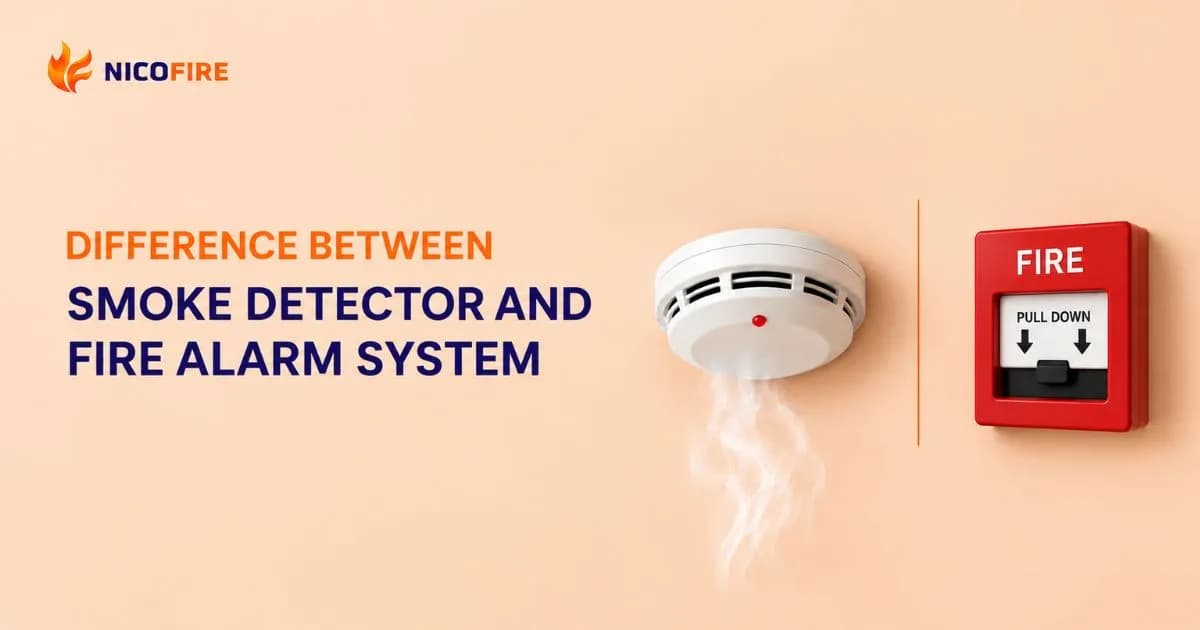
A small warning can make a big difference when a fire starts. Smoke detectors and fire alarm systems both help protect people from fire, but they do not work in the same way.
A smoke detector finds smoke and gives a warning, while a fire alarm system connects different devices to warn people across a building.
In this guide, you will learn the difference between a smoke detector and a fire alarm system, how they work, and which one is best for your property.
Table of Contents
What’s the difference between a smoke detector and fire alarm system?
How to Choose the Right Smoke Detector or Fire Alarm System?
How Does a Smoke Detector Work?
A smoke detector is a fire safety device that detects smoke in the air. It is made to identify smoke early and give a warning when there may be a fire. Smoke detectors are commonly used in homes, offices, shops, hotels, and other buildings.
Inside the detector, a sensor continuously checks the surrounding air. When smoke enters the detector and reaches the sensor, it detects the smoke and triggers the alarm. This gives people an early warning so they can take action before the fire spreads.
In a standalone smoke detector, the alarm usually comes directly from the device. When the detector is connected to a fire alarm system, it sends a signal to the fire alarm control panel. The panel can then activate sounders, bells, warning lights, or other connected devices to alert people in different areas of the building.
How Does a Fire Alarm System Work?
A fire alarm system is a fire safety system that detects a possible fire and warns people in the building. It uses different devices, such as smoke detectors, heat detectors, and manual call points, to detect signs of fire.
When one of these devices detects smoke, heat, or a fire signal, it sends a signal to the fire alarm control panel. The panel receives the signal and processes it to determine where the alarm has been triggered.
The control panel then activates connected devices such as sounders, bells, horns, or warning lights to alert people in different areas of the building. This helps occupants know about a possible fire quickly and gives them more time to respond and evacuate.
What’s the difference between a smoke detector and fire alarm system?
Smoke detectors and fire alarm systems both help protect people and property from fire, but their purpose, size, and use can be different. A smoke detector is mainly used to detect smoke in a particular area and give a warning, while a fire alarm system can connect several devices and alert people across different parts of a building. Here are the main points to consider when choosing between the two.
Feature | Smoke Detector | Fire Alarm System |
Main purpose | Detect smoke | Detect fire and alert people |
Coverage | Usually a specific area | Multiple areas or the whole building |
Alarm | Usually local in standalone use | Can alert different areas through connected devices |
Control panel | Not always needed | Usually has a central control panel |
Devices | Mainly smoke detection | Smoke detectors, heat detectors, call points, sounders and more |
Monitoring | Limited in standalone use | Can provide centralized monitoring |
Installation | Simple for standalone units | Requires proper system design and installation |
Best for | Homes and small spaces | Offices, hotels, schools, hospitals, factories and larger buildings |
Cost | Usually lower | Usually higher |
Expansion | Limited | Can be expanded with more devices and zones |
Tip: For complete fire safety, use both a smoke detector for early smoke detection and a fire alarm system for wider warning across the building. |
Which Is Better: Smoke Detector or Fire Alarm System?
There is no single correct answer for every building. The right choice depends on:
The size of the building
The number of floors and rooms
How many people use or sleep in the space
The type of activity happening there (cooking, machinery, chemicals, guests, patients)
Existing fire safety equipment already in place
Whether the building is likely to expand in the future
A small home with two or three rooms may be well protected with a few good smoke detectors placed in the right locations. A hotel, hospital, school, or factory, where many people may not know the layout or may be sleeping, working, or unable to move quickly, generally needs a complete fire alarm system to give everyone timely, coordinated warning.
How to Choose the Right Smoke Detector or Fire Alarm System?
The right fire safety solution depends on your property type, building size, number of people, and fire risk. A smoke detector is useful for early smoke detection, while a fire alarm system connects several devices to provide wider warning across the building.
1. For Homes and Small Spaces
For homes, apartments, and small rooms, smoke detectors provide an easy way to get an early warning when smoke is detected. Installing them in suitable areas such as bedrooms, hallways, and other important parts of the home helps improve fire safety and gives people more time to react.
2. For Offices and Commercial Buildings
Offices, shops, hotels, schools, and other commercial buildings have more rooms and people to protect. A fire alarm system connects smoke detectors, heat detectors, manual call points, and alarm devices so that a fire warning can reach people in different parts of the building.
3. For Factories and Warehouses
Factories and warehouses often have greater fire risks because of machinery, electrical equipment, stored goods, and other materials. A properly designed fire alarm system provides wider detection and warning, helping staff respond quickly and start evacuation when needed.
4. Consider Installation and Maintenance
Choosing the right product is only one part of fire safety. Proper installation, regular testing, cleaning, battery checks, and maintenance help make sure the smoke detector or fire alarm system works properly when it is needed.
For complete fire protection, consider other essential fire safety equipment such as fire extinguishers, fire blankets, and fire hydrant systems along with your smoke detector or fire alarm system.
Common Mistakes People Make
Choosing the wrong fire safety equipment or using it the wrong way can leave parts of a building without enough protection. Here are some common mistakes to avoid.
One detector for the whole building: One smoke detector only covers the area where it is installed. Large homes, offices, and multi-storey buildings need detectors in the right rooms and areas.
Choosing only by price: Do not choose a smoke detector or fire alarm system only because it is cheap. Check the product quality, building size, fire risk, installation, and maintenance needs.
Wrong detector placement: The place where you install a smoke detector is important. Steam, cooking smoke, and dust can cause false alarms or affect how the detector works, so install it in the right place.
Ignoring regular testing and maintenance: Fire safety equipment needs regular checks to make sure it works when needed. Test smoke alarms, keep them clean, replace batteries when needed, and check fire alarm systems regularly.
Conclusion
A smoke detector and a fire alarm system both play an important role in fire safety, but they are used for different levels of protection. A smoke detector detects smoke and gives an early warning, while a fire alarm system connects different devices to warn people across the building.
For homes and small spaces, properly installed smoke detectors can provide useful early warning. For larger buildings such as offices, hotels, schools, hospitals, factories, and warehouses, a complete fire alarm system provides wider protection.
For complete fire safety, choose the right system for your building and make sure it is properly installed, tested, and maintained.
Comments
No comments yet.
Be the first to share your thoughts.