

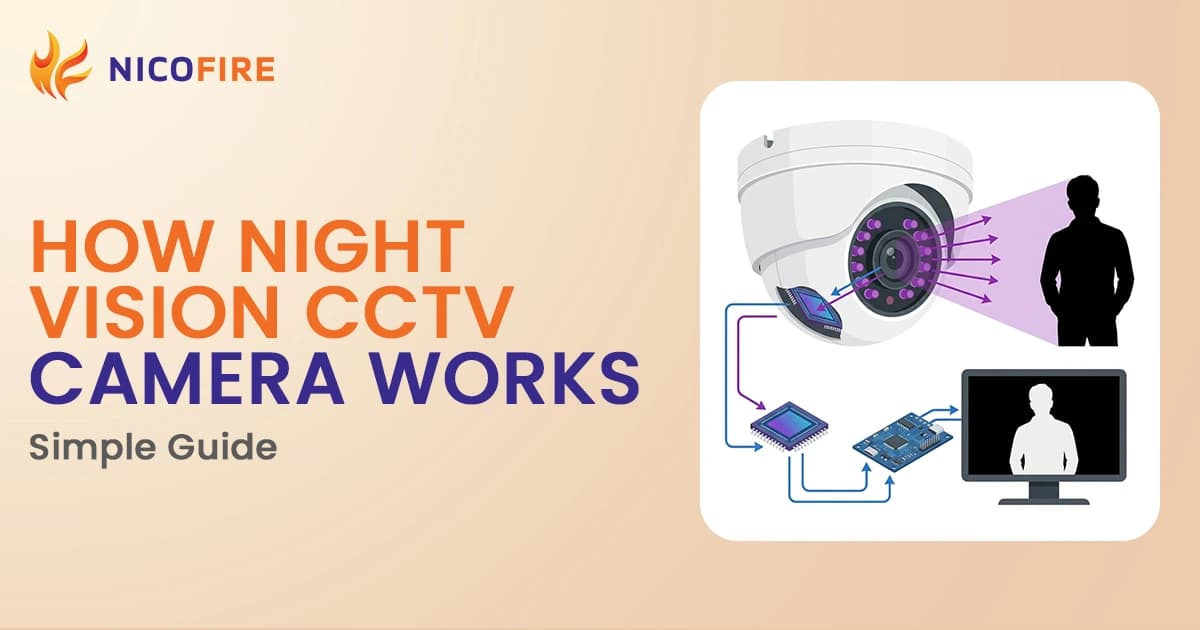
Keeping your home or business safe at night is just as important as during the day. When it gets dark, it becomes difficult to see what is happening around your property. Night vision CCTV cameras solve this problem by recording clear video even in low-light or dark conditions.
In this guide, you will learn how night vision CCTV cameras work, the different types of night vision technology, and how to choose the right camera for better security at night.
Table of Contents
How CCTV Cameras Work at Night
Light We Cannot See
Humans can only see a small portion of the light around us, which is called visible light. When it gets dark, this visible light becomes very low, so our eyes struggle to see anything clearly. But there are other types of light that we cannot see, such as infrared light. Night vision CCTV cameras are designed to detect this invisible infrared light. They collect it and turn it into images that we can view on a screen. Because the camera can sense more types of light than our eyes can, it is able to show clear pictures even when the surroundings look completely dark to us. This allows night vision cameras to work effectively in homes, shops, and offices during nighttime.
How Cameras Capture Light at Night
At night, a regular camera cannot record properly because it does not get enough visible light. A night vision CCTV camera solves this problem by using infrared LEDs and sensitive low-light sensors. The infrared LEDs shine invisible light into the area, and the camera captures the light that bounces off objects like people, walls, and vehicles. Even though this light is invisible to us, the camera can pick it up easily. Some cameras can also use very small amounts of natural light, such as moonlight or streetlights, to make the image brighter. After collecting the available light, the camera processes it and creates a clear video that you can watch on your phone or computer, even when your eyes see nothing in the dark.
The Camera Sensor
Inside every CCTV camera is a component called the image sensor, usually a CMOS sensor, which acts like the camera’s eye. Its job is to collect all available light, including both visible and infrared light, and turn it into a digital image. When the sensor is of high quality, it can capture more light and produce brighter, clearer, and sharper footage, even at night. This helps you see important details such as faces, movement, and objects around your property. A good sensor is one of the most important parts of a night vision camera because it directly affects how well your camera performs in dark conditions.
Types of Night Vision in CCTV Cameras
1. Infrared Night Vision
Infrared night vision is the most common type used in CCTV cameras, specially in AHD and IP Cameras. It works with small infrared lights called IR LEDs. These LEDs shine invisible light into the area the camera is watching. Even though our eyes cannot see this light, the camera can see it clearly and turn it into a black-and-white picture. This allows the camera to work even when it is completely dark. Infrared cameras are easy to use, not very costly, and are a good choice for most homes, shops, and offices in Nepal. They help you see movement, people, and objects during the night, giving you basic but reliable security.
2. Low-Light or Starlight Night Vision
Low-light or Starlight night vision uses a very sensitive camera sensor that can see even tiny amounts of natural light, such as moonlight, stars, or light from nearby houses or street lamps. Instead of depending only on infrared lights, the camera uses this small amount of light to make a brighter and sometimes colorful night image. This makes the picture clearer than regular infrared cameras. Starlight cameras are a good choice for outdoor areas where there is at least a little light. They are useful for yards, parking spaces, building entrances, and streets because they show more detail and make the surroundings easier to understand at night.
3. Full-Color Night Vision
Full-color night vision allows the camera to show bright, colorful images even at night. It uses strong sensors and small white-light LEDs to brighten the area, helping the camera record the real colors of clothes, vehicles, or objects. Because the video stays in color, it becomes easier to identify people and understand what is happening. The details are much clearer compared to black-and-white footage. Full-color cameras, especially modern Wireless CCTV Cameras, are very helpful in places where every detail matters, such as house gates, driveways, shops, and any area where you need to easily recognize colors and objects at night.
4. Thermal Night Vision
Thermal night vision works in a completely different way. It does not use light at all. Instead, it looks for heat coming from people, animals, vehicles, and other warm objects. Anything that gives off heat shows up clearly on the camera screen. This allows the camera to work even in complete darkness, heavy fog, smoke, or dust. Thermal cameras can see movement from long distances and are very strong in tough conditions. They are mostly used in large fields, farms, factories, borders, and high-security areas where normal night vision may not work well. Even though thermal cameras are more expensive, they provide powerful and reliable nighttime monitoring.
Main Parts of a Night Vision CCTV Camera
1. The Camera Sensor
The camera sensor is one of the most important parts of a night vision CCTV camera because it works like the camera’s eye. Most cameras use a CMOS sensor, which is designed to collect any available light or heat in front of the camera. Even if the light is very weak, the sensor tries to capture as much as possible. After collecting the light, the sensor turns it into a digital picture or video that you can see on your phone or computer. A high-quality sensor can capture more light and more detail, which means the footage will look clearer and brighter at night. This is especially helpful for seeing faces, movements, and objects in dark areas. Without a good sensor, the camera would not be able to show useful images during the night.
2. The Camera Lens
The lens is the part that controls how much light enters the camera, and this plays a big role in night vision. If the lens can gather more light, the camera can create a brighter and sharper image even when it is dark. A good lens helps the camera see more clearly in low-light conditions, making nighttime videos easier to understand. Some lenses are wider, which means they can cover a bigger area in one shot. This is helpful when you want to watch large spaces like yards, shops, parking areas, or building entrances. A wider lens reduces blind spots and helps make sure nothing important is missed. The quality of the lens greatly affects how well the camera performs at night.
3. Infrared and White Light
Night vision CCTV cameras often use extra light sources to help them see in complete darkness. The most common light source is infrared LEDs. These LEDs shine invisible infrared light into the area the camera is watching. Even though you cannot see this light with your eyes, the camera can detect it easily and use it to create a black and white night image. This allows the camera to work even when there is no natural light at all. Some cameras also use white light illuminators, which work like tiny built-in flashlights. They brighten the area so the camera can capture real colors at night instead of only black and white. White light is very useful for full-color night vision because it helps you see the exact colors of clothes, vehicles, and objects. Both infrared and white light help the camera maintain clear visibility at night.
4. The Camera Processor
The processor inside the camera is responsible for turning the raw image data into a clear and smooth video. It works very fast to clean up the picture by removing unwanted grain, sharpening important details, adjusting the brightness, and improving the overall quality of the footage. A strong processor helps the camera handle night scenes better because nighttime footage usually has less light and more noise. When the processor is powerful, you get clearer and more stable videos without freezing or blurring. This helps you easily understand what is happening in the recorded footage and makes your security system more reliable.
5. Storage Options
Night vision CCTV cameras offer different ways to store video footage depending on your needs. NVR systems are used for setups with many cameras, and they save all the footage in one place, making it easy to manage and review. They are commonly used in offices, shops, and larger homes. Cloud storage saves your videos online so you can watch them from anywhere using the internet, and your footage stays safe even if the camera is damaged or stolen. SD cards are used in small or standalone cameras and are a simple option for saving video directly inside the camera. This is useful for small spaces or basic security needs. You can choose the storage method that fits your budget, how many cameras you have, and how long you want to keep your recordings.
Why Night Vision Matters in CCTV Security
1. Always Watching
Night vision is important because it allows your CCTV camera to keep working even when there is no light at all. During the day, there is enough sunlight for a normal camera to see clearly, but at night everything becomes dark and harder to watch. Night vision makes sure the camera does not stop working after sunset. It continues recording every minute, giving true 24-hour protection. This is very helpful because many burglaries, break-ins, and suspicious movements usually happen at night when people are sleeping and streets are quiet. With night vision, the camera captures all activity during these hours, making sure nothing is missed. This nonstop monitoring gives your home, shop, or office much stronger security.
2. Clear Footage at Night
Night vision helps your camera record clear videos even when it is almost completely dark. A normal camera would show a black screen at night, but a night vision camera can show important details like faces, body shapes, number plates, clothing colors, and movements. These details are very important for identifying people or understanding what happened in a certain situation. Clear night footage makes it easier to review events and gives strong evidence if you ever need to report something to the police or security team. Because night vision improves visibility, it increases the chances of catching important information that would normally be lost in darkness.
3. Scares Intruders Away
Night vision cameras often have small lights that glow in the dark, such as infrared LEDs or white-light LEDs. When someone approaches your property at night and sees these lights, they immediately know a camera is watching. Most intruders do not want to be recorded because it increases the risk of them getting caught. So, the simple presence of a night vision camera can scare them away before they try anything. This means the camera does not only record incidents but also helps prevent them. A visible night vision camera can make your home or business look more secure, reducing the chance of break-ins, damage, or theft.
4. Feel Safe Anytime
Night vision gives you comfort because you know your camera is protecting your property even when you are not there. Whether you are sleeping inside your home or away on a trip, you can trust that your camera is still watching and recording. Many modern CCTV systems allow you to check live videos on your phone anytime, so you can easily see what is happening around your home, office, or shop. This constant access helps you feel safe, relaxed, and confident because you know your surroundings are being monitored day and night. Night vision adds an extra layer of security that helps keep your family and property safe at all hours.
What to Check Before Buying a Night Vision CCTV Camera
Before purchasing a night vision CCTV camera, it is important to evaluate key features that affect performance, reliability, and long-term use. Factors such as image quality, night vision range, durability, and brand credibility play a crucial role in effective surveillance, especially in low-light conditions. Choosing CCTV cameras from trusted and certified suppliers like Nicofire ensures quality assurance, compliance with safety standards, and reliable performance for residential, commercial, and industrial security needs.
1. Image Quality
Image quality is one of the most important things to look at when choosing a night vision CCTV camera. A higher resolution, such as Full HD or 4K, gives a clearer and sharper picture, making it easier to recognize faces, vehicles, clothing, and other important details. When your camera records at a higher resolution, the video looks more natural and is more useful as evidence if you ever need it. Even though higher-quality cameras may cost a bit more, they provide better security, especially at night when small details matter the most. It is always a good idea to choose the best image quality that fits your budget.
2. Night Viewing Distance
Night viewing distance, also called IR illumination range, tells you how far the camera can see at night. Some cameras can only see a short distance, while others cameras like ptz camera can see many meters ahead. If you need to monitor a large outdoor area, such as a warehouse, parking lot, shop front, or open yard, choosing a camera with a longer night range will give you better coverage. A camera with a strong night range helps you see people or movement that happens far away, and this gives you more time to react if something unusual occurs. Always check this distance to make sure it fits the size of the area you want to protect.
3. Low-Light Ability
Low-light performance shows how well the camera can record when there is not much light around. Cameras with good low-light ability can make the picture brighter without needing extra light sources. Features like Starlight technology or improved camera sensors help the camera use even tiny amounts of natural light to produce a clear image. This is very useful for places that have some light at night, such as streets, gates, or rooms with small lamps. A camera with strong low-light performance will give you clearer and more colorful night videos, making it easier to see what is happening in dark areas.
4. View Area
The field of view tells you how much area the camera can cover at one time. A wider field of view means the camera can watch more space, which helps reduce blind spots. This allows you to use fewer cameras and still keep your whole area secure. A wide view is especially helpful for open spaces like gardens, shop interiors, driveways, and office entrances. With more coverage from one camera, you save money and get better overall security.
5. Weather Resistance
If you plan to install the camera outdoors, it must be strong enough to handle dust, rain, heat, cold, and other changing weather conditions. Weatherproof ratings like IP65 or IP66 tell you how well the camera can resist these elements. A higher rating means the camera is better protected and will last longer. This is important in Nepal, where weather can change quickly between rain, dust, sun, and wind. A weatherproof camera makes sure your night security stays active all year round without damage.
6. Smart Features
Modern CCTV cameras come with smart features that make security easier and more effective. These features include human detection, vehicle alerts, motion tracking, and AI-based notifications. They help the camera focus on real threats instead of reacting to small movements like insects or leaves. Smart features also reduce false alarms and allow you to receive alerts on your phone when something important happens. This makes the camera more reliable and helps you respond quickly to any activity around your home or business.
7. Connection Type
CCTV cameras offer different ways to connect to the internet or recording system. Wi-Fi cameras are easy to install and are a good choice for homes or small shops where the internet signal is strong. PoE cameras use a single cable for both power and internet, making them stable and ideal for larger setups that need reliable performance. Cameras with 4G LTE are useful in remote locations where there is no Wi-Fi connection. They run using a SIM card and can send live video from almost anywhere. Choosing the right connection type depends on where you plan to install the camera and what kind of internet access is available.
How to Improve Your Night Vision CCTV Performance
1. Best Camera Position
The place where you install your CCTV camera has a big effect on how well the night vision works. For the best results, the camera should have a clear and open view of the area you want to watch. Make sure nothing blocks the camera’s sight, such as plants, walls, or hanging objects. Night vision uses infrared light to see in the dark, so the camera should be positioned in a way that allows these IR lights to spread evenly across the space. Avoid pointing the camera directly at bright lights like street lamps, car headlights, or home lights because these can make the picture look too bright or washed out. A good placement helps the camera create clearer and more useful night footage.
2. Avoid Reflections
Reflections can weaken night vision and make the video look blurry or unclear. When the camera faces shiny surfaces like glass windows, metal doors, tiles, or polished walls, the infrared light can bounce back into the camera and create a white glow. This makes it hard to see what is really happening in the scene. To fix this, place the camera slightly away from reflective surfaces or adjust its angle so the IR light does not bounce straight back. If you need to record through a window, it is better to mount the camera outside the glass. Reducing reflections gives you a much cleaner and brighter night image.
3. Keep the Camera Clean
Dust, dirt, spider webs, fingerprints, and moisture can easily collect on the camera lens and the infrared LEDs. When this happens, night vision becomes weak because the light cannot travel properly. Over time, the video may start to look cloudy, dim, or foggy. Cleaning the lens and LEDs regularly with a soft cloth helps keep the camera working at its best. This simple habit improves clarity, brightness, and overall video quality, especially at night when the camera depends heavily on clean lenses to capture light. Regular maintenance helps your camera last longer and perform better every day.
4. Know the Camera’s Limits
Even the best night vision camera has some limits, and understanding these helps you set the right expectations. Weather conditions like fog, smoke, and heavy rain can block light and reduce how far the camera can see. Strong glare from nearby lights can also affect the picture. Night vision may not record very clear images at extremely long distances, especially if the camera is not designed for long-range viewing. By understanding these limitations, you can choose the right camera, place it correctly, and know what it can realistically capture. This helps you get the best performance from your CCTV system.
Conclusion
Night vision technology has improved a lot over time. In the past, cameras could only show simple black-and-white images at night. But today, cameras can show bright color images, use special sensors to see in very low light, and even use heat to find people or animals in complete darkness. These new features help CCTV cameras work better in all kinds of places and give strong protection day and night. Because night vision is now so advanced, it has become an important part of keeping homes, shops, and businesses in Nepal safe.
When you choose a night vision CCTV camera, it is important to think about where you will use it, how much you want to spend, and what level of safety you need. Some places may need long-distance night vision, while others may need clear color images at night or strong low-light performance. New cameras also come with smart tools like AI detection, which helps the camera notice humans, vehicles, and movement more correctly. As technology continues to grow, night security will become even easier and more helpful, giving you clearer pictures, faster alerts, and more peace of mind. A good night vision CCTV camera helps protect your home or business at all times, both day and night.
Frequently Asked Questions
Yes, most night vision cameras can see in total darkness. They use invisible infrared light to brighten the area, even when there is no light at all.
Night vision works well in both places, but it depends on lighting and placement. Outdoors, the camera must handle darkness, rain, and dust. Indoors, the camera should not face bright lights or shiny surfaces that can cause reflections.
Night vision images can look blurry if the lens is dirty, the camera is too far away, or the infrared light is bouncing off a wall or window. Cleaning the lens and adjusting the angle usually helps.
Infrared LEDs in CCTV cameras can last many years. On average, they work for thousands of hours because they only turn on when it gets dark.
No, night vision does not use a lot of electricity. The infrared LEDs use very little power, so the camera can run all night without a big increase in your bill.
Night vision can still work in rain or fog, but the image may not be fully clear. Water and fog block light, so the camera may show a softer or hazy picture.
Not always. A long night range is good for open areas, but for small rooms or short spaces, even a short-range night vision camera works perfectly.
Comments
No comments yet.
Be the first to share your thoughts.