

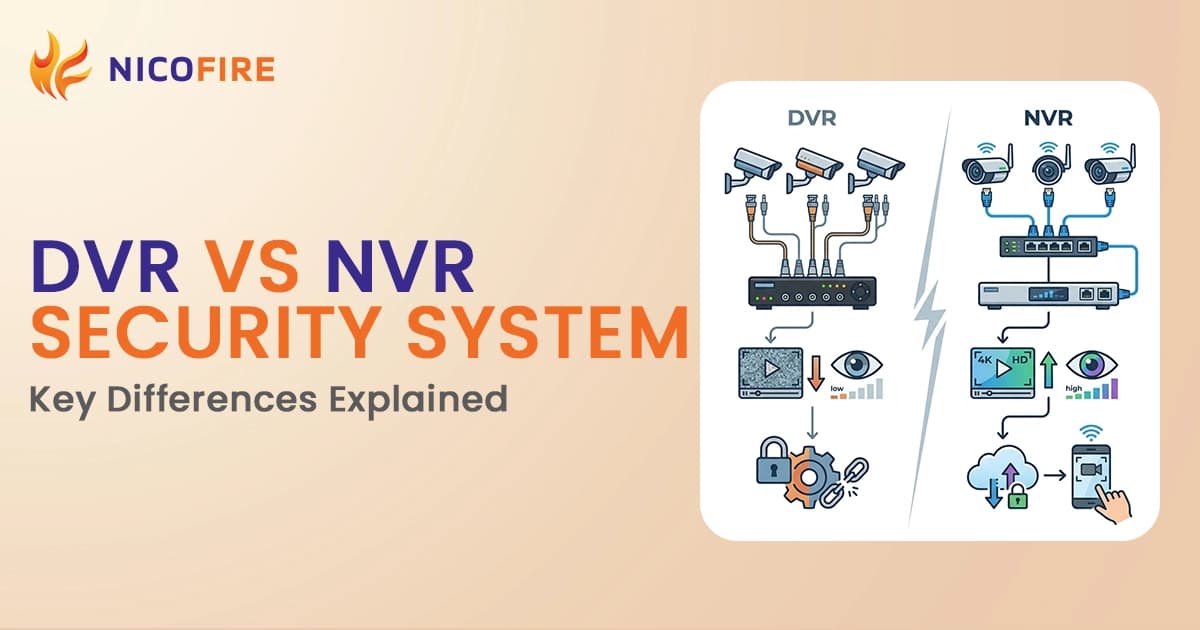
Security is very important for homes, shops, offices, and organizations in Nepal. CCTV cameras help protect property, reduce theft, and keep an eye on daily activities. While choosing a CCTV system, many people get confused between DVR and NVR security systems. Both systems record camera footage, but they work in different ways and are used for different purposes. Knowing the key differences between DVR and NVR will help you choose the right security system based on your budget, location, and future security needs.
Table of Contents
What Is a DVR Security System?
A DVR (Digital Video Recorder) security system is a type of CCTV system that records video footage from analog security cameras. It is one of the oldest and most commonly used surveillance systems in Nepal. DVR systems are popular because they are affordable, easy to install, and simple to operate. Due to their low cost and reliable performance, they are widely used in homes, small shops, and local businesses that need basic security monitoring without advanced features.
1. How a DVR Security System Works
In a DVR security system, CCTV cameras capture video and send the footage to the DVR unit using coaxial cables. The DVR then converts the analog video into a digital format and stores it on an internal hard disk. Users can watch live camera footage or replay recorded videos by connecting the DVR to a monitor or television. If the system is connected to the internet, users can also view the cameras remotely through a mobile app or computer, which adds extra convenience.
2. Types of Cameras Used in DVR Systems
DVR systems use analog and HD-analog cameras such as AHD, HD-CVI, and HD-TVI cameras. These cameras are easily available in the Nepali market and are known for their budget-friendly price. While they do not offer very high resolution like IP cameras, Jovision cameras they still provide clear and reliable video for everyday security needs. These cameras are suitable for monitoring entrances, cash counters, and open areas.
3. Where DVR Security Systems Are Commonly Used
DVR security systems are commonly used in small retail shops, houses, godowns, schools, and small offices across Nepal. They are ideal for places where basic security is required and the budget is limited. DVR systems are also suitable for locations where internet access is unstable, as they can record video even without an internet connection. This makes them a practical and reliable choice for many users.
What Is an NVR Security System?
An NVR (Network Video Recorder) security system is a modern CCTV system that records video from IP cameras. These cameras work using a network or internet connection. Compared to older systems, NVR security systems provide clearer video, better features, and more flexibility. In Nepal, NVR systems are becoming popular in offices, businesses, and modern homes because they offer better security and are easier to upgrade in the future. This system is a good choice for people who want clear camera footage and smart security features.
1. How an NVR Security System Works
In an NVR security system, IP cameras capture video and change it into digital data inside the camera. This video data is then sent to the NVR using a network cable or Wi-Fi. The NVR saves the video on a hard drive. Users can watch live video or recorded footage using a monitor, mobile phone, or computer. When the system is connected to the internet, users can check their cameras from anywhere, which makes security monitoring more convenient and reliable.
2. Types of Cameras Used in NVR Systems
NVR systems use IP cameras that are available in different video quality options such as Full HD, 4MP, 5MP, and 4K. These cameras show clear and sharp images, even at night or in low light. Many IP cameras come with useful features like motion detection, night vision, sound recording, and remote viewing. Because of these features, IP cameras are suitable for places where clear video and better security are important.
3. Where NVR Security Systems Are Commonly Used
NVR security systems are widely used in offices, banks, hotels, hospitals, shopping centers, and large buildings in Nepal. They are also used in homes that need strong security. These systems are suitable for places where many cameras are needed and where security may increase in the future. Since NVR systems are easy to expand and manage, they are a good option for long-term security planning.
DVR vs NVR Security System: Key Differences
Understanding the key differences between DVR and NVR security systems helps you choose the right CCTV setup for your home, shop, or office in Nepal. Both systems are used to record camera footage, but they differ in video quality, camera type, installation method, storage capacity, internet needs, and overall cost. Knowing these points in detail can help you avoid extra expenses and select a system that suits your security needs now and in the future.
1. Video Quality and Resolution
NVR security systems provide much better video quality compared to DVR systems. NVR systems use IP cameras that support higher resolution such as Full HD, 4MP, 5MP, and even 4K. This makes it easier to clearly see faces, movements, and number plates. DVR systems usually support lower resolution cameras, which are enough for basic monitoring but not ideal for detailed viewing. If clear and sharp video is important, NVR is the better choice.
2. Camera Type: Analog vs IP
DVR systems work with analog or HD-analog cameras, which send video in a basic format to the recorder. These cameras are simple and cost less. NVR systems use IP cameras that process video digitally inside the camera. Because of this, IP cameras provide clearer images and support features like motion alerts and remote viewing. This makes NVR systems more advanced and reliable for modern security needs.
3. Cabling and Installation Difference
DVR systems need two separate cables for each camera—one cable for video and another for power. This can make installation more difficult and messy, especially in bigger buildings. NVR systems usually use a single Ethernet cable that carries both power and video data. This makes installation cleaner, faster, and easier. It also allows cameras to be placed at longer distances without signal loss.
4. Storage and Scalability
NVR systems are easier to expand in the future. If you want to add more cameras, you can do so as long as the network allows it. DVR systems have limited expansion because they come with fixed camera channels like 4, 8, or 16. This means upgrading a DVR system often requires replacing the entire unit. For growing security needs, NVR systems are more flexible.
5. Internet and Network Requirement
DVR systems can record video without the internet, which is helpful in areas with unstable connections in Nepal. The Internet is only needed if you want remote viewing. NVR systems depend more on a proper network setup, but the internet is mainly required for viewing cameras remotely on a mobile app or computer. Recording can still work on a local network.
6. Cost Comparison
When choosing between DVR and NVR security systems in Nepal, cost is one of the main things people consider. DVR systems are generally cheaper to buy at first. A basic 4-camera DVR security setup with decent cameras and storage usually costs around NPR 15,000 to NPR 30,000. Because of this lower price, DVR systems are very popular for homes, small shops, and budget security needs. On the other hand, NVR systems cost more upfront.
A 4-camera NVR system with good quality IP cameras typically starts from around NPR 30,000 to NPR 60,000 or more, depending on the camera resolution and storage size. Even though NVR systems are pricier at the beginning, they offer better video quality, smarter features, and easier future upgrades, which can save money in the long run. In simple terms, DVR systems are easier on your wallet today, while NVR systems can give better value for money over time.
Pros and Cons of DVR Security Systems
Advantages of DVR Security Systems
Affordable and budget-friendly CCTV option in Nepal
Easily available in local markets
Simple to install and easy to use for beginners
Works without internet for video recording
Suitable for basic security needs
Ideal for homes, small shops, and small offices
Low maintenance and reliable performance
Limitations of DVR Security Systems
Lower video quality compared to NVR systems
Limited camera resolution and zoom clarity
Fewer smart features like motion alerts
Remote viewing features are basic
Limited system expansion options
Fixed camera channels restrict future upgrades
Not ideal for large buildings or advanced security needs
Pros and Cons of NVR Security Systems
Advantages of NVR Security Systems
High-quality video with clear and sharp images
Supports Full HD, 4MP, 5MP, and 4K cameras
Better zoom and detail compared to DVR systems
Easy remote viewing through mobile apps and computers
Smart features like motion detection and alerts
Easy to add more cameras when security needs grow
Suitable for long-term and future security planning
Ideal for offices, businesses, and large buildings
Limitations of NVR Security Systems
Higher initial cost compared to DVR systems
Requires proper network setup for best performance
Internet connection needed for remote monitoring
Setup may be slightly complex for beginners
May cost more for maintenance and upgrades
Not ideal for very small budgets
Which Is Better: DVR or NVR Security System?
Choosing between a DVR and NVR security system depends on your security needs, budget, and location. For small homes and users with limited budgets, DVR security systems are a good choice. They are affordable, easy to use, and suitable for basic security monitoring. DVR systems also work without the internet, which makes them practical for many homes in Nepal. However, if a home needs clearer video quality and remote monitoring through a mobile phone, an NVR system is a better option.
For offices, shops, and business places, NVR security systems are usually the better choice. They offer high-quality video, support more cameras, and are easy to expand as security needs grow. Although NVR systems cost more at the beginning, they provide advanced features and are more future-ready. In simple terms, DVR systems are budget-friendly today, while NVR systems are a better long-term investment for stronger security. For both DVR and NVR security solutions, choosing a trusted provider like Nicofire ensures reliable products, professional support, and long-term security performance.
Conclusion
Both DVR and NVR security systems have their own strengths and limitations. DVR systems are affordable and simple, while NVR systems offer advanced features and better video quality. The right choice depends on your security requirements, budget, and future plans. If you are planning to improve safety at your home or workplace, explore different security system options and choose the one that fits your needs best. Investing in the right CCTV system today can provide peace of mind for years to come.
Frequently Asked Questions
The main difference is that DVR systems use analog cameras, while NVR systems use IP cameras. NVR systems provide better video quality and smart features compared to DVR systems.
DVR is better for small homes with a limited budget, while NVR is better for homes that need clear video quality and remote monitoring through mobile phones.
Yes, both DVR and NVR systems can record video without internet. Internet is only required if you want to view the cameras remotely.
Yes, NVR systems are usually more expensive than DVR systems. However, NVR offers better features and long-term value.
In most cases, DVR systems cannot be directly upgraded to NVR. You usually need to replace cameras and the recorder.
NVR security systems are best for offices and businesses because they support more cameras, better video quality, and easy expansion.
Comments
No comments yet.
Be the first to share your thoughts.