

Fire can start anywhere. It can start in a kitchen, an office, a shop, a factory, or even in your car. When it does, the fire extinguisher in your hand can save lives and property, but only if it is the right one.
Many people in Nepal buy a fire extinguisher just to complete a checklist. They do not think about which type actually suits their space. This is a costly mistake. A wrong extinguisher can fail to put out the fire, or worse, make it spread faster.
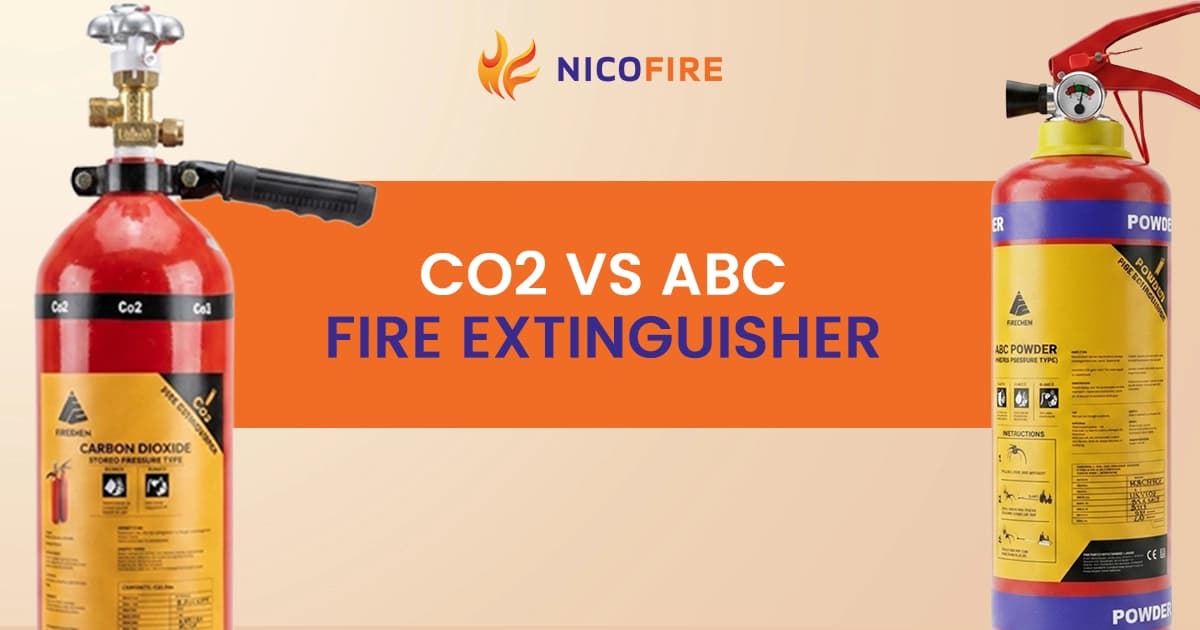
Two of the most common types you will find in shops and safety supply stores are the CO2 fire extinguisher and the ABC fire extinguisher. Both are useful, but they are built for different situations. In this guide, we will explain both the types, compare them side by side, and help you decide which one fits your home, office, shop, or factory.
Table of Contents
Why Choosing the Right Fire Extinguisher Matters
Not all fires are the same. A fire caused by burning paper behaves differently from a fire caused by cooking oil or an electrical short circuit. Each extinguisher is designed to fight certain types of fire, known as fire classes.
If you use the wrong extinguisher, you may not stop the fire. In some cases, using the wrong type on an electrical fire can even cause an electric shock. This is why understanding the difference between CO2 and ABC extinguishers is not just useful information. It is a safety necessity.
Let's start by understanding what each one actually is.
What Is a CO2 Fire Extinguisher?
A CO2 fire extinguisher uses carbon dioxide gas as its extinguishing agent. The gas is stored inside the cylinder under high pressure, in liquid form. When you use it, the CO2 shoots out as a cold gas and a bit of dry ice-like snow.
CO2 works by pushing oxygen away from the fire. Fire needs oxygen to burn, and without it, the flame simply dies out. CO2 also cools the burning material a little, which helps stop the fire from restarting.
You will notice that CO2 extinguishers have a wide horn-shaped nozzle instead of a hose with a small opening. This horn helps release the gas in a wide cloud, which is more effective at cutting off oxygen.
CO2 extinguishers are mainly built to fight:
Class B fires – flammable liquids like petrol, diesel, oil, and paint
Class C / Electrical fires – fires involving live electrical equipment, wiring, or machines
Because CO2 leaves no residue behind, it is a favorite choice for places with sensitive electronics, such as server rooms and control panels.
What Is an ABC Fire Extinguisher?
An ABC fire extinguisher uses a dry chemical powder, usually made of mono-ammonium phosphate. This is why it is often simply called a "dry powder extinguisher" or "dry chemical extinguisher."
When you spray it, the powder covers the burning material and smothers the fire. It also disrupts the chemical reaction that keeps the fire burning. This makes it a fast and powerful way to knock down flames.
The name "ABC" comes from the three fire classes it can handle:
Class A fires – solid materials like wood, paper, cloth, and rubber
Class B fires – flammable liquids like petrol, oil, and paint
Class C fires – flammable gases like LPG or natural gas
Because it covers three major fire classes, the ABC extinguisher is the most common all-purpose extinguisher used in homes, offices, shops, and factories across Nepal.
How CO2 and ABC Extinguishers Work
Both extinguishers stop fire, but they use very different methods. Here is a basic table to show how they compare.
Feature | CO2 Fire Extinguisher | ABC Fire Extinguisher |
Extinguishing Agent | Carbon dioxide gas | Dry chemical powder (mono-ammonium phosphate) |
How It Works | Removes oxygen and cools the fire slightly | Smothers fire and stops the chemical reaction |
Fire Classes Covered | B and C (electrical) | A, B, and C |
Residue After Use | None, gas evaporates completely | Powdery residue, needs cleaning |
Safe for Electrical Equipment | Yes, very safe, no conductive residue | Can be used but leaves corrosive powder on equipment |
Cleanup Effort | Very easy, almost nothing to clean | Requires proper cleaning, powder is messy |
Best for Indoor Use | Yes, especially closed rooms with electronics | Yes, works well in most indoor spaces |
Best for Outdoor Use | Less effective, wind blows gas away | Yes, works well even with light wind |
Weight | Heavier for the same size due to gas pressure | Lighter and easier to carry |
Maintenance | Needs periodic pressure check | Needs periodic powder and pressure check |
Common Applications | Server rooms, electrical panels, labs, generators | Homes, offices, shops, factories, warehouses, vehicles |
Fire Classes Explained
Understanding fire classes helps you know which extinguisher to trust in an emergency. Here is a simple breakdown.
Fire Class | Type of Fire | Example Materials | CO2 Suitable? | ABC Suitable? |
Class A | Solid materials | Wood, paper, cloth, rubber, plastic | No | Yes |
Class B | Flammable liquids | Petrol, diesel, oil, paint, thinner | Yes | Yes |
Class C | Flammable gases and electrical equipment | LPG, natural gas, propane, wiring, transformers, computers, panels | Yes (best choice) | Usable, but leaves residue |
As you can see, ABC extinguishers cover a wider range of fire types. But when it comes to Class C fires involving live electrical equipment or sensitive electronics, CO2 is usually the safer and cleaner option, since it does not conduct electricity and leaves nothing behind.
Which One Should You Choose for Different Places?
This is the question most people actually want answered. Below is a practical guide based on common buildings and spaces in Nepal.
Location | Recommended Extinguisher | Why |
Home (living room, bedroom) | ABC | Covers wood, cloth, and general household fire risks |
Kitchen | ABC (or a wet chemical extinguisher for cooking oil, if available) | Handles Class A and B fires common in kitchens |
Office | ABC, with CO2 near server or IT rooms | Offices have paper and electronics, so both may be needed |
Server Room / Data Center | CO2 | No residue, safe for electronics, no conductivity risk |
Electrical Panel Room | CO2 | Non-conductive, avoids damage to wiring and panels |
Factory / Warehouse | ABC, with CO2 near machinery and control panels | Covers solid materials and liquid fire risks in one unit |
Shop / Retail Store | ABC | Handles fabric, paper, and packaging materials |
School | ABC | General-purpose protection for classrooms and offices |
Hospital | ABC in general areas, CO2 near equipment rooms | Protects both patients' areas and sensitive medical devices |
Hotel / Restaurant | ABC, with a wet chemical extinguisher in the kitchen | Covers guest rooms, lobby, and dining areas |
Vehicles (car, bus, truck) | ABC (small size) | Compact, light, and effective for engine or seat fires |
Many large buildings, like hospitals, hotels, and factories, actually use a combination of both types. They place ABC extinguishers in general areas and CO2 extinguishers near sensitive equipment like server racks, transformers, or control panels.
Common Mistakes When Choosing Extinguishers
Even with good intentions, many people get this wrong. Here are mistakes to avoid.
One type for the whole building: A single ABC extinguisher may not be enough if you also have a server room or electrical panel nearby. Assess each area separately.
CO2 in a small, closed room: CO2 pushes oxygen out of the air, which is how it fights fire. But in a small sealed room, this can also reduce breathable oxygen for people. Always keep doors open and evacuate the area once the fire is out.
Skipping the fire class check: Some people buy an extinguisher just because it looks similar to what a neighbor has. Always match the extinguisher to your actual fire risk.
No proper training: Even the best extinguisher is useless if no one knows how to use it. Make sure staff or family members know the basic steps: pull the pin, aim at the base of the fire, squeeze the handle, and sweep side to side.
Hard-to-reach placement: An extinguisher locked in a cupboard or placed behind furniture will not help during an emergency. Keep it visible and easy to grab.
Ignoring the pressure gauge: A fire extinguisher that has lost pressure may not work when you need it most. Check the gauge regularly.
Buying Tips: How to Choose the Right Extinguisher
Choosing a fire extinguisher is not just about grabbing whatever is available at the nearest shop. A little planning before you buy can save you money and make sure you actually get protection that works for your space. Here is what to think about before making a purchase.
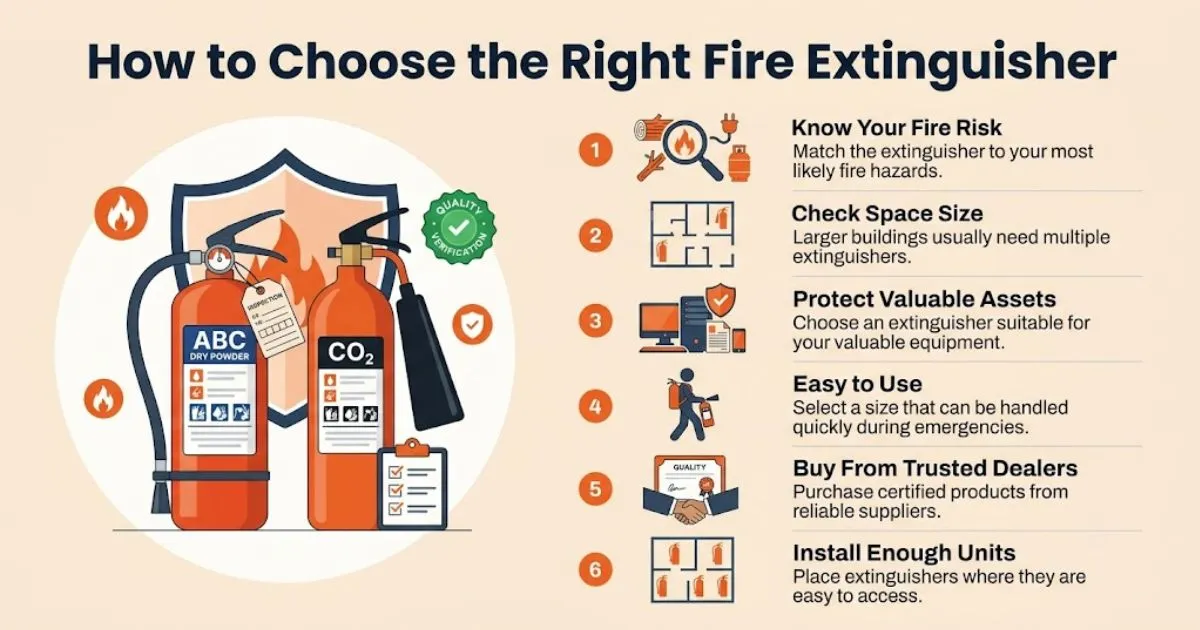
1. Know Your Fire Risk
Look around your space and note what could actually catch fire. Wood and paper, electrical equipment, gas cylinders, or flammable liquids each call for a different type of protection. Knowing your risk before you shop saves you from buying the wrong extinguisher later.
2. Check the Space Size
Larger areas may need bigger extinguishers or multiple units placed at different points. A single small extinguisher is often not enough for a warehouse, a multi-floor office, or a large factory floor.
3. Consider What You're Protecting
If you have expensive electronics, computers, or important documents, CO2 is worth the extra cost because it avoids residue damage. Think of it as protecting not just the building, but also the valuable equipment and records inside it.
4. Think About Ease of Use
ABC extinguishers are lighter, which makes them easier for most people, including elderly family members, to lift and use during an emergency. In a real fire, a heavy cylinder can slow someone down when every second counts.
5. Buy From a Trusted Dealer
Make sure the extinguisher meets recognized safety standards and comes with a proper service record. A cheap, uncertified extinguisher may look fine on the shelf but fail when you actually need it.
6. Don't Just Buy One and Forget It
Plan for the right number of extinguishers based on the size of your building and local fire safety recommendations. One extinguisher near the entrance is rarely enough for a full home, shop, or office.
Importance of Regular Inspection and Servicing
Buying the right extinguisher is only the first step. It also needs regular care to work properly when a fire actually happens.
Check the pressure gauge every month to confirm it is in the green zone.
Inspect the cylinder for any dents, rust, or damage.
Get professional servicing done at least once a year, or as recommended by the manufacturer.
Replace or refill the extinguisher immediately after any use, even a partial one.
Place extinguishers in visible, easily accessible locations, near exits, hallways, and high-risk areas like kitchens or electrical rooms.
Train your staff or family on how to read the instructions and operate the extinguisher confidently.
A neglected fire extinguisher can give people false confidence. It is better to check it regularly than to find out it does not work during an actual fire.
Conclusion
CO2 and ABC fire extinguishers are both valuable fire safety equipment, but they serve different purposes. CO2 is the cleaner, safer choice around electrical equipment and sensitive electronics. ABC is the more versatile, all-purpose option that covers solid materials, liquids, and gases.
For most homes, shops, schools, and general offices in Nepal, an ABC extinguisher is a solid choice. But if you have a server room, electrical panel, or expensive equipment, adding a CO2 extinguisher nearby gives you extra protection without the mess.
The best approach is often a mix of both, placed according to the specific fire risks in each area of your building. Take time to assess your space, choose wisely, and keep your extinguishers well maintained. That small investment can make a huge difference when it matters most.
Frequently Asked Questions
No. CO2 extinguishers are not effective on Class A fires like wood, paper, or cloth. They work best on electrical fires and flammable liquids. For solid material fires, use an ABC extinguisher instead.
Yes, ABC extinguishers can be used on electrical fires. However, the powder leaves a residue that can stick to wiring and circuits, which may cause long-term damage. For sensitive electronics, CO2 is a better option.
An ABC extinguisher is generally recommended for home kitchens because it handles both solid materials and liquid fires.
CO2 is a gas, not a powder or liquid. When it is released, it works by displacing oxygen and then simply evaporates into the air, leaving nothing behind to clean up.
Most fire extinguishers should be inspected monthly and professionally serviced at least once a year. If the extinguisher is used, even partially, it should be refilled or replaced right away.
CO2 extinguishers release carbon dioxide gas that removes oxygen, making them ideal for electrical fires and flammable liquids. ABC extinguishers use dry powder to stop the chemical reaction, making them suitable for solid materials, liquids, and electrical fires.
It depends on the size and layout of your building. Larger spaces with different fire risks, such as kitchens, electrical rooms, and storage areas, usually need more than one extinguisher, placed strategically based on each area's specific hazard.
Comments
No comments yet.
Be the first to share your thoughts.