

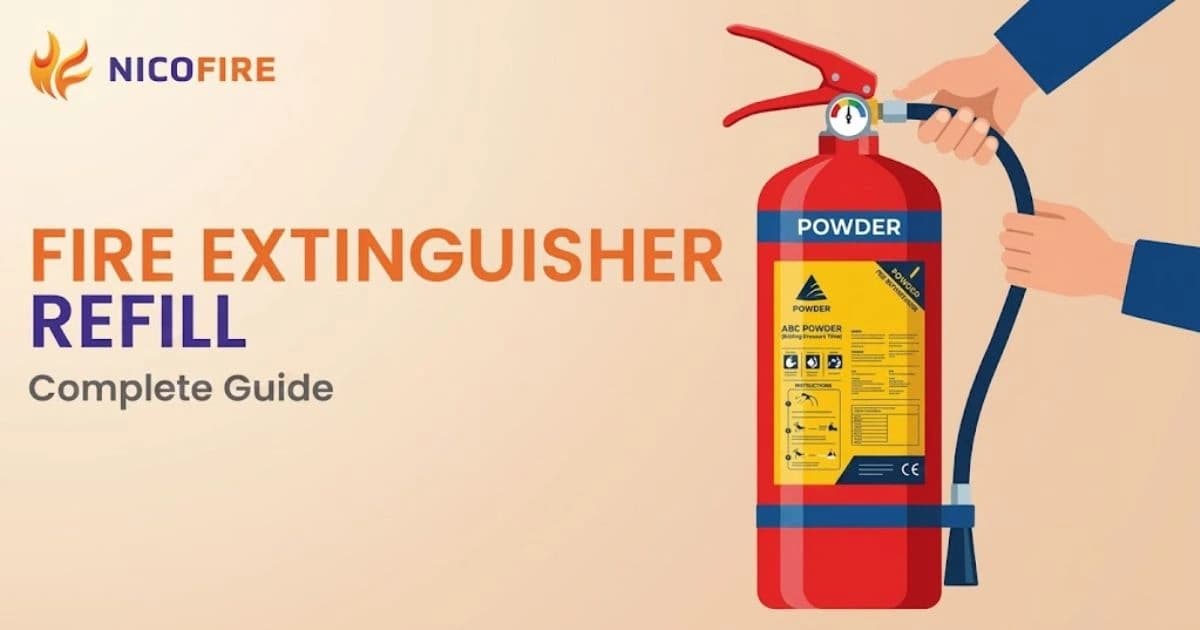
A fire extinguisher is an important safety tool that many people forget to check. But during an emergency, it can help stop a small fire before it becomes dangerous. In homes, offices, shops, and factories in Nepal, having a fully working extinguisher can protect lives and property. Since fires can start without warning, it is important to make sure your extinguisher is always filled, checked, and ready to use. Keeping it in good condition gives you confidence that you are prepared for any sudden fire situation.
Many people are unsure about when a fire extinguisher should be refilled or checked, but the process is actually simple. In this guide, you will learn how often to refill your extinguisher, what signs to look for, and when it might be better to replace it instead of refilling.
Table of Contents
Understanding Your Fire Extinguisher
How an Extinguisher Works
A fire extinguisher works by releasing a stored agent that helps stop a fire. The agent can be powder, CO2, foam, or water. Inside the cylinder, strong pressure pushes this agent out when you pull the pin and press the handle. Even if the extinguisher is never used, the pressure inside can slowly drop over time. If the pressure becomes too low, the extinguisher may not work properly in an emergency. This is why regular refilling and simple inspections are so important. When you understand how the extinguisher works, it becomes easier to take care of it and keep it ready at all times.
Types of Extinguishers
In Nepal, common fire extinguishers include ABC dry powder models, CO2 extinguishers, foam extinguishers, and water-type extinguishers. Each type works differently and needs a different method of refilling. For example, CO2 extinguishers must be refilled using special machines because they hold very high pressure. ABC dry powder extinguishers need to be opened and checked to make sure the powder is still loose and effective. Foam and water extinguishers also have their own servicing steps. Knowing which type you have helps you understand the correct refill process and ensures you keep your extinguisher in good working condition.
Why Maintenance Matters
Owning a fire extinguisher is not enough. What truly matters is keeping it ready to use. Basic maintenance includes checking the pressure gauge, making sure the extinguisher has no leaks or damage, and placing it where it can be reached easily during an emergency. Fire extinguishers also work best when they are part of a complete fire safety setup that includes smoke alarms, fire blankets, fire alarm systems, and safety signs. When all these tools work together, your home or workplace becomes much safer. Regular maintenance keeps your extinguisher reliable and strengthens your overall fire protection plan.
When to Refill a Fire Extinguisher
1. Refill After Every Use
A fire extinguisher should always be refilled after it has been used, even if you sprayed only a small amount. Once the extinguisher releases any pressure, it loses some of its strength. This means it may not work properly the next time you need it. Many people think a half-used extinguisher is still safe, but in reality, it may not have enough pressure or agent to stop a fire. Refilling it right after use ensures it remains fully ready for the next emergency. This simple habit can make a big difference in protecting your home or workplace.
2. Check the Pressure Gauge
The pressure gauge is one of the easiest ways to check if your extinguisher is ready to use. Most extinguishers have a small round gauge on the top that shows if the pressure is in the safe zone. When the needle is in the green zone, the extinguisher is good to go. If the needle moves into the red zone, it means the pressure is too low or too high, and the extinguisher needs servicing or refilling. Checking the gauge once a month only takes a few seconds. This small routine helps you catch problems early and ensures your extinguisher will work during an emergency.
3. Look for Physical Damage
Fire extinguishers can get damaged over time, especially in busy workplaces or areas with moisture. Rust, dents, cracks, loose hoses, or chemical leakage are signs that something is wrong. Even minor damage can affect how the extinguisher sprays or releases pressure. If you notice any of these issues, it is safer to get the extinguisher inspected by a fire safety professional. Repairing or refilling a damaged extinguisher now can prevent a bigger risk later. Keeping the extinguisher in a clean and safe place also helps reduce damage.
4. Get Yearly Professional Service
Apart from your monthly checks, every fire extinguisher needs a full professional inspection once a year. Trained technicians will open the extinguisher, check the internal parts, test the pressure, and make sure the agent is still effective. They will also tell you whether the extinguisher needs to be refilled or replaced. This type of servicing follows safety standards used in homes, offices, shops, and industries in Nepal. A yearly professional service keeps your extinguisher reliable and ensures it will perform properly in a real emergency.
Refill or Replace Your Fire Extinguisher
When Refilling Is the Right Choice
Refilling, also called recharging, is a good option when the fire extinguisher is still in good physical condition. If the cylinder has no damage, no rust, and no leakage, and the only issue is low pressure or an empty agent, then a refill is usually enough. Many common extinguishers in Nepal, such as ABC dry powder and CO2 models, are designed to be refilled many times during their lifespan. Refilling is also more affordable than buying a new extinguisher. It keeps your extinguisher ready for use while saving money and reducing waste. As long as the extinguisher is safe and strong, refilling is a smart and economical choice.
When Replacement Is the Better Option
There are times when replacing the extinguisher is safer than refilling it. If the extinguisher is old, expired, heavily rusted, dented, or has a broken handle or hose, it may no longer work correctly. Old extinguishers can fail without warning, which can be dangerous during a fire emergency. If a technician tells you that the cylinder is weak or damaged, buying a new extinguisher is the best option. A new unit gives you fresh pressure, reliable performance, and peace of mind for many years. Choosing replacement when necessary ensures your safety always comes first.
How to Read the Extinguisher Label
Every fire extinguisher comes with a label that provides important information. This label includes the model type, the date it was made, refill instructions, and safety warnings. By reading this label, you can understand how old the extinguisher is and when it should be refilled or replaced. The label also helps you identify the type of agent inside, which is important for choosing the correct servicing method. Checking the label only takes a moment, but it helps you make smarter and safer decisions about your fire extinguisher.
The Professional Refilling Process
Why Professional Refilling Is Important
A fire extinguisher must always be refilled by a trained professional because the refilling process needs special tools and careful handling. Inside the extinguisher, there is strong pressure that pushes the agent out during a fire. If this pressure is not filled correctly, the extinguisher may not work when you need it. A professional knows how much pressure to put inside and what type of refilling method is right for each extinguisher. They also clean the inside of the extinguisher, check the valve, look for hidden damage, and make sure the extinguisher is completely safe to use. Trying to refill an extinguisher at home is not safe because you cannot check the pressure or seal it correctly. You may also use the wrong agent or let dust or dirt enter the cylinder, which can damage the extinguisher. When a professional refills it, they follow safety rules, use proper equipment, and test the extinguisher after refilling. This gives you confidence that your extinguisher will work properly in a real emergency.
How to Find a Good Fire Safety Service Provider
Choosing the right service provider like nicofire is very important because a poorly refilled extinguisher can be risky. In Nepal, look for companies that are licensed and have experience in fire extinguisher refilling. A good company should have trained technicians who know how to handle different types of extinguishers such as ABC dry powder, CO₂, foam, or water models. You can check online reviews or ask friends, shops, or offices which service provider they trust. A reliable service provider will explain their process clearly. They will check your extinguisher, refill it properly, test it in front of you if needed, and give you a service tag or report. This shows that your extinguisher has been checked and is safe to use. Choosing a trusted company ensures your extinguisher gets the right treatment and stays in good condition for a long time.
Staying Safe Beyond Refilling
1. Do Monthly Checks
Checking your fire extinguisher once a month is an easy habit that helps keep your home or workplace safe. Start by looking at the pressure gauge and make sure the needle is in the green zone, because this shows the extinguisher has the right pressure to work properly. If it is in the red zone, it needs servicing. Next, make sure the extinguisher is placed in a spot where you can reach it quickly and easily. It should not be blocked by furniture or stored inside a closed cabinet. Also check that the safety pin is still locked in place and the seal is not broken, because a broken seal may mean the extinguisher was used or damaged. These small monthly checks take only a minute, but they help you find problems early and keep the extinguisher ready for any emergency.
2. Add Extinguishers to Your Safety Plan
A fire extinguisher is most effective when it is part of a complete fire safety plan. This means creating a simple escape plan for your home or office so everyone knows where to go and how to exit safely during a fire. Installing fire alarms gives you an early warning when smoke or heat is detected, which gives you more time to act. You should also teach your family members or staff how to use a fire extinguisher, because many people panic during emergencies simply because they do not know how it works. It is also important to check your safety tools every few months and replace anything old or damaged. When you combine good planning, early warnings, and proper training with a ready fire extinguisher, you create a strong and reliable safety system that protects everyone.
3. Use Other Fire Safety Tools
A fire extinguisher is important, but you should also have other fire safety tools to stay fully protected. Smoke detectors help warn you early by detecting smoke before the fire spreads. Fire blankets are useful for putting out small kitchen fires or helping someone whose clothes have caught fire. Emergency lights help guide people safely during power cuts caused by fire, especially in dark hallways or staircases. Fire alarms alert everyone in the building at the same time, which is very important in offices, apartments, schools, and shops. When you use all these tools together, they create a layered safety system that makes it easier to control small fires, reduce damage, and protect lives during emergencies.
Safe Disposal of Old Extinguishers
Why Proper Disposal Matters
Old or damaged fire extinguishers should never be thrown away like normal household waste. Even if an extinguisher looks empty or broken, it can still hold pressure or leftover chemicals inside. If someone handles it the wrong way, the extinguisher can burst, leak, or cause injury. Some extinguishers also contain materials that can harm the environment if they are not handled correctly. Proper disposal makes sure the extinguisher is made completely safe before it is thrown away or recycled. This protects you, the people handling the waste, and the environment. Taking the time to dispose of an old extinguisher correctly is an important part of responsible fire safety.
How to Dispose of Them Safely
When your fire extinguisher is no longer usable, the best way to get rid of it is to take it to a proper disposal center or a trusted fire safety service provider in Nepal. These professionals have the right tools to release the pressure safely, remove the chemicals, and recycle the metal parts. This process makes sure the extinguisher is handled in a safe and eco-friendly way. Never throw an extinguisher into a regular waste bin or leave it outside, because this can be dangerous for anyone who comes in contact with it. By giving the extinguisher to trained experts, you make sure it is disposed of safely and responsibly.
Conclusion
Keeping your fire extinguisher in good condition is one of the easiest ways to protect your home or workplace from fire. When you check it regularly, make sure the pressure is correct, and refill it on time, you reduce the risk of the extinguisher failing during an emergency. A ready extinguisher gives you confidence, helps you act quickly, and can stop a small fire before it becomes dangerous. Simple steps like monthly checks and yearly servicing play an important role in keeping you and the people around you safe.
Fire safety should never be left until the last moment. Take a few minutes today to look at your extinguisher, check the pressure gauge, and see if it needs a refill or replacement. If anything looks damaged or unsure, contact a fire safety professional. Updating your safety tools and keeping your extinguisher ready ensures you are always prepared. By taking these small actions now, you create a safer environment for your family, staff, and property in the future.
Frequently Asked Questions
A fire extinguisher should be checked monthly for pressure, damage, or leaks, and professionally serviced at least once a year. It must be refilled after any use, even if only partially discharged, to ensure it works during an emergency.
No, refilling a fire extinguisher should always be done by a trained professional. Using the wrong agent or pressure can make the extinguisher unsafe or ineffective in a real fire.
If the extinguisher is old, heavily rusted, dented, has a broken handle or hose, or has expired, replacement is safer than refilling. A new extinguisher ensures reliable performance and proper pressure.
ABC dry powder extinguishers are versatile for solids, liquids, and electrical fires. CO₂ is for electrical fires, foam for flammable liquids, water for ordinary solids, and wet chemical for kitchen oil fires. Using the correct type prevents accidents.
Check the pressure gauge regularly; the needle should be in the green zone. Also inspect for physical damage, rust, leaks, or a broken safety pin. If anything seems wrong, have it serviced professionally.
Old extinguishers should never be thrown in regular trash. Take them to a licensed fire safety provider or disposal center, where they can safely release pressure, remove chemicals, and recycle parts without harm to people or the environment.
Comments
No comments yet.
Be the first to share your thoughts.