A fire can start at any time and spread very quickly. A fire alarm system helps detect smoke or heat and warns people before the fire becomes more dangerous. It is an important safety system for homes, offices, shops, schools, hospitals, and other buildings in Nepal.
In this guide, you will learn how a fire alarm system works, its main parts, and why it is important for protecting people and property during a fire emergency.
Table of Content
What is a Fire Alarm System?
A fire alarm system is a group of simple devices that work together to warn you when there is smoke, heat, or fire in a building. It has parts like smoke detectors, heat detectors, a main control box, loud alarms, and small switch boxes that you can press during an emergency. All these parts stay active all the time and quietly keep an eye on your surroundings. If they notice something unusual, they quickly turn on the alarm so people can leave the place safely. These systems are used in homes, offices, schools, hospitals, shops, and big buildings in Nepal because they help people know about danger early and prevent serious damage. In simple words, a fire alarm system protects you by warning you before a fire becomes big.
How Does a Fire Alarm System Work?
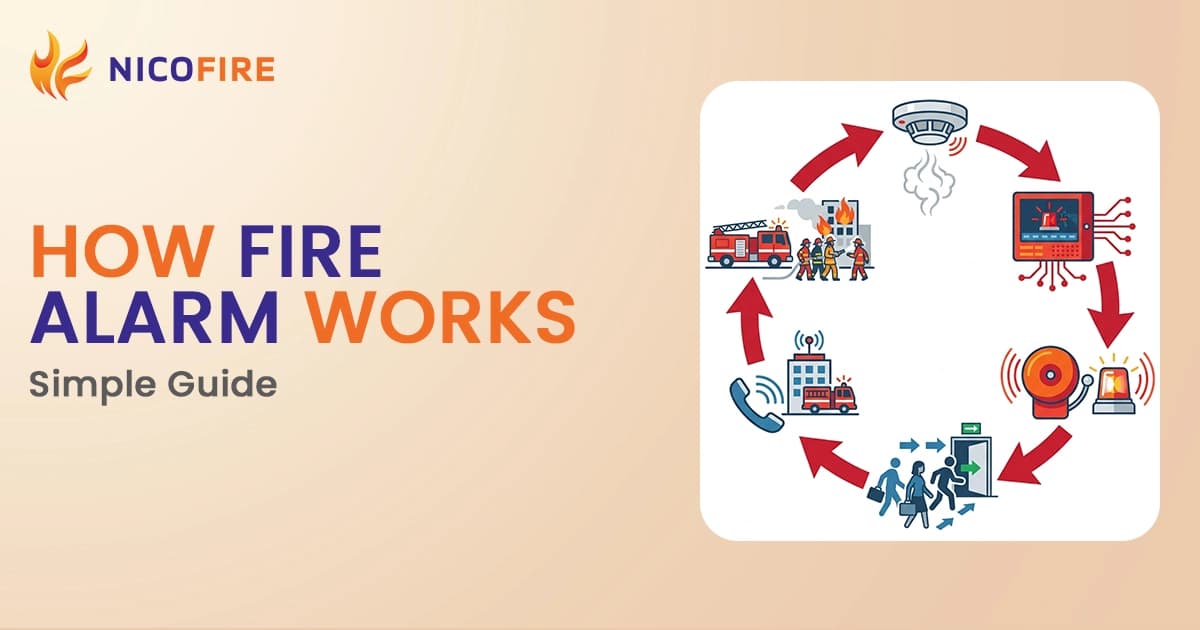
A fire alarm system works in a straight and easy way. First, the detectors sense smoke, heat, or fire in the room. As soon as they notice something wrong, they send a message to the main control box, which is like the brain of the system. The control box checks where the problem is coming from and then turns on the loud alarms and flashing lights so everyone can hear and see the warning. Some buildings also have voice messages that tell people what to do and where to go. In many places, the system also sends a call or message to security staff or the fire brigade so they can help quickly. The whole process happens in just a few seconds, giving people time to move to safety before the fire spreads.
Step 1: How Fire Alarms Detect Danger Early
Automatic Detection Devices
Automatic detectors are small safety devices that keep watching for signs of fire every second. They do not sleep or stop working, so they can catch danger early. Smoke detectors look for tiny smoke particles in the air, which helps them spot a fire when it is still small. Heat detectors sense when the temperature becomes much hotter than normal, which is useful in kitchens or dusty areas. Flame detectors are used in special places like fuel storage or factories where fire can appear quickly. These detectors send a signal the moment they notice something unusual. In Nepal, smoke detectors are the most common because they respond fast and give people more time to leave the building safely.
Manual Call Points
Manual call points are simple emergency buttons that people can press when they see fire or smoke. Many people know them as break-glass units because you press or break the small glass to activate them. They are usually placed near doors, staircases, corridors, and other easy-to-reach places so anyone can use them quickly during an emergency. Manual call points are helpful because sometimes a person sees fire before any detector reacts. Pressing the call point immediately warns everyone in the building and starts the alarm. This extra layer of safety makes manual call points a very important part of fire protection in many Nepali buildings.
Step 2: The Fire Alarm Control Panel
The Fire Alarm Control Panel is the main brain of the whole fire alarm system. All signals from smoke detectors, heat detectors, flame detectors, and manual call points reach this panel first. When something unusual happens, the control panel immediately checks where the danger started and shows the exact location on its display. After that, it turns on the alarms, activates flashing lights, and controls any connected safety devices inside the building. In many modern buildings in Nepal, these panels can handle signals from many rooms and floors at the same time. This helps people respond quickly because they know exactly where the problem is, saving time during an emergency.
How the Control Panel Reads and Responds to Signals
When a detector senses smoke, heat, or fire, it sends a clear message to the control panel. The panel then checks what type of signal it received. It could be smoke in a room, a sudden rise in temperature, someone pressing a manual alarm, or even a system issue. After understanding the signal, the control panel decides the next step. It may start the siren, switch on the flashing lights, or send a warning to the fire brigade or security staff. This simple process happens very fast and helps make sure the right action is taken at the right time.
How the Control Panel Tracks Zones and System Health
Most big buildings in Nepal use zone-based fire alarm systems. This means every section or floor of the building is given a zone number. If a fire starts, the control panel shows exactly which zone has the problem. This makes it easy for emergency teams to find the danger quickly without wasting time. The control panel also checks the health of the whole system throughout the day. It monitors wiring, batteries, detectors, and all connected devices to make sure everything is working properly. If something is not working, it shows a warning so it can be fixed before a real emergency happens.
Step 3: How the Fire Alarm Warns People
Once the fire alarm system detects danger, it must quickly warn everyone inside the building. This step is very important because people need a clear and fast warning to move to safety before the fire gets bigger. The system uses different types of alerts so that everyone, including children, older people, and workers in noisy areas, can understand the warning. These alerts help people react quickly, avoid confusion, and find the nearest exit in time.
Loud Alarms
When the system confirms a fire, loud alarms begin to ring throughout the building. These sirens are designed to be very noticeable because they must catch people’s attention immediately. Even if people are talking, working on machines, or listening to music, the loud sound can still be heard clearly. The main purpose of this alarm is to make everyone stop what they are doing and understand that they need to leave the area. In Nepal, loud alarms are used in offices, malls, shops, schools, factories, and even residential buildings because they offer a fast and effective warning to everyone.
Flashing Lights
Along with loud alarms, many fire alarm systems also use bright flashing lights. These lights are very helpful in places where the noise level is high or where people may not hear the alarm clearly. The flashing light grabs attention quickly and tells people that something is wrong. It also helps people who have hearing problems or disabilities understand that there is a fire emergency. Flashing lights are common in factories, event halls, and large commercial buildings in Nepal because they make the warning more visible and ensure no one misses it.
Voice Messages
In bigger or more complex buildings, voice messages are used to guide people safely during an emergency. A recorded or automated voice plays through speakers and gives clear instructions such as “Please use the nearest exit” or “Do not use the lift.” These messages help people stay calm and avoid panic because they know exactly what to do. This system is very useful in crowded places like shopping malls, hospitals, airports, hotels, and high-rise buildings in Nepal. Voice messages make evacuation more organized and help prevent confusion, especially for people who may not know the building layout well.
Step 4: How the System Calls for Help
After the fire alarm system warns people inside the building, the next important step is to make sure help is on the way. Fire can spread quickly, and even a small delay can make the situation worse. To avoid this, many fire alarm systems are made to contact emergency services or important people automatically. This makes the building safer because someone outside the building will know there is a fire and can take action immediately.
Automatic Notification
Some fire alarm systems can send a message to the fire brigade as soon as the alarm goes off. The system does this on its own without waiting for a person to make a phone call. This is very helpful at night, early in the morning, or during times when there are not many people in the building. In big buildings in Nepal such as apartments, hotels, offices and shopping areas, automatic notification is very important. It helps the fire brigade get the information quickly so they can start moving toward the building faster. Early notification gives firefighters more time to control the fire before it becomes too big.
Dialers and Communication Devices
Many fire alarm systems also use special devices called dialers. A dialer sends a message when the alarm starts. It can call or text people using telephone lines, mobile networks or the internet. The message can go to building owners, security guards, monitoring centers or anyone who is added to the contact list. This helps even if the important people are far away or not watching the system. They can receive the message on their phone and take action quickly. In Nepal, many businesses use dialers because they want a fast way to know about a fire even when no one is physically near the building.
Why Quick Response Is Important
Acting quickly during a fire can save lives and prevent large amounts of damage. A fire can grow bigger in just a few minutes. If firefighters know about the fire early, they can reach the building sooner and start controlling it before it spreads. In Nepal, things like heavy traffic, narrow roads and long travel distances can slow down emergency vehicles. This is why early reporting from a fire alarm system is very important. It gives firefighters more time to reach the location and stop the fire before it becomes more dangerous. A quick response means more safety for the people and less damage to the property.
Extra Safety Features & Simple Maintenance
Fire alarm systems today do more than just detect fire and warn people. Modern systems have many helpful features that make buildings safer and easier to protect. These features help reduce false alarms, connect with other safety systems and keep the whole system working properly. Understanding these extra features is important because they can make a big difference during an emergency.
Reducing False Alarms
False alarms happen when the system turns on even though there is no real fire. This can happen because of dust, insects, steam, smoke from cooking or because the detector is placed in the wrong spot. False alarms can cause fear and confusion and may make people ignore real warnings. To reduce false alarms, it is important to clean detectors regularly and place them in the correct location. Using good quality detectors also helps because they are better at telling the difference between real danger and harmless things. Keeping the area clean and checking the detectors often can greatly reduce false alarms in homes and buildings in Nepal.
Working Together With Other Safety Systems
Modern fire alarm systems can work together with other safety equipment in the building. This makes the response faster and more organized during an emergency. For example, when the fire alarm turns on, the sprinkler system may start spraying water to control the fire. Emergency lights may switch on to help people see clearly during evacuation. Some doors may unlock so that people can leave the building easily and safely. Ventilation fans may turn off to stop smoke from spreading. All of these actions happen automatically and help people escape quickly. In many large buildings in Nepal, this connected system is very important for keeping everyone safe.
Why Standards and Rules Are Important
Fire alarm systems must follow certain rules and safety standards to work properly. These rules explain how detectors should be placed, how the wiring should be done, and how the entire system should be installed and maintained. Following well known standards like NFPA guidelines or local Nepal building codes makes the system more reliable. It also reduces the chances of failure during an emergency. When a system follows proper standards, it means the building is safer and the fire alarm is more likely to work correctly when needed.
Taking Care of the System
A fire alarm system needs regular care to stay in good working condition. This includes cleaning the detectors, checking the batteries, inspecting the wiring and testing the alarms to make sure everything works properly. These tests help find problems early before they become serious. In Nepal, building owners are encouraged to check their systems every month and call a trained technician for a full inspection every year. Regular maintenance ensures that the system is ready to protect the building at any time.
Conclusion
Fire alarm systems work silently in the background and protect you by detecting danger early and warning everyone in time. They help people escape safely and allow emergency teams to reach the location faster. From sensing smoke to sounding alarms and sending messages for help, every part of the system plays an important role. Understanding how these systems work makes it easier to see why they are such an important part of fire safety in homes, offices, shops, and large buildings in Nepal.
A fire alarm system can only keep you safe if it is installed properly, checked regularly, and kept in good condition. Small problems like a weak battery or a dusty detector can stop the system from working during a real emergency. This is why regular testing and simple maintenance are important. Whether you are at home or at work, taking fire safety seriously can protect lives and property. Choosing a good fire alarm system and looking after it can make a big difference when every second matters.
Frequently Asked Questions
A fire alarm system detects smoke, heat, or flames and alerts people early. It is important because it gives time to evacuate safely and helps prevent major fire damage in homes, offices, shops, and buildings in Nepal.
Fire alarm systems use smoke detectors, heat detectors, and sometimes flame detectors. These devices sense danger and send a signal to the control panel to trigger alarms instantly.
The control panel acts as the brain of the system. It receives signals from detectors, identifies the location of the fire, and activates alarms, lights, and safety devices. Some panels also notify the fire brigade automatically.
Fire alarms use loud sirens, flashing lights, and sometimes voice messages. These alerts help everyone, including people with hearing problems, evacuate quickly and safely.
Many modern systems send automatic messages or calls to fire brigades, security guards, or monitoring centers. This ensures quick response even if no one is physically present in the building.
Check detectors, batteries, and wiring regularly. Clean detectors to prevent false alarms and have a professional inspection yearly. Regular maintenance ensures the system works properly in an emergency.
Comments
No comments yet.
Be the first to share your thoughts.