

How to Choose a Fire Hydrant System: Complete Buying Guide

Fire safety is essential for protecting people, buildings, and businesses. A fire hydrant system plays a key role in controlling fire quickly and reducing damage. In Nepal, where buildings range from small homes to large commercial spaces, choosing the right fire hydrant system is very important. This guide helps property owners, builders, and managers understand fire hydrant systems in simple terms so they can select a safe and reliable solution.
Many people choose a fire hydrant system based only on cost, which can cause problems later. A proper buying guide helps you understand basic system types, safety needs, and local rules before making a decision. When you select a system that matches your building size and fire risk, it works better in emergencies and lasts longer. Making the right choice also improves safety and saves money over time.
Table of Contents
Understanding the Basics
What Is a Fire Hydrant System?
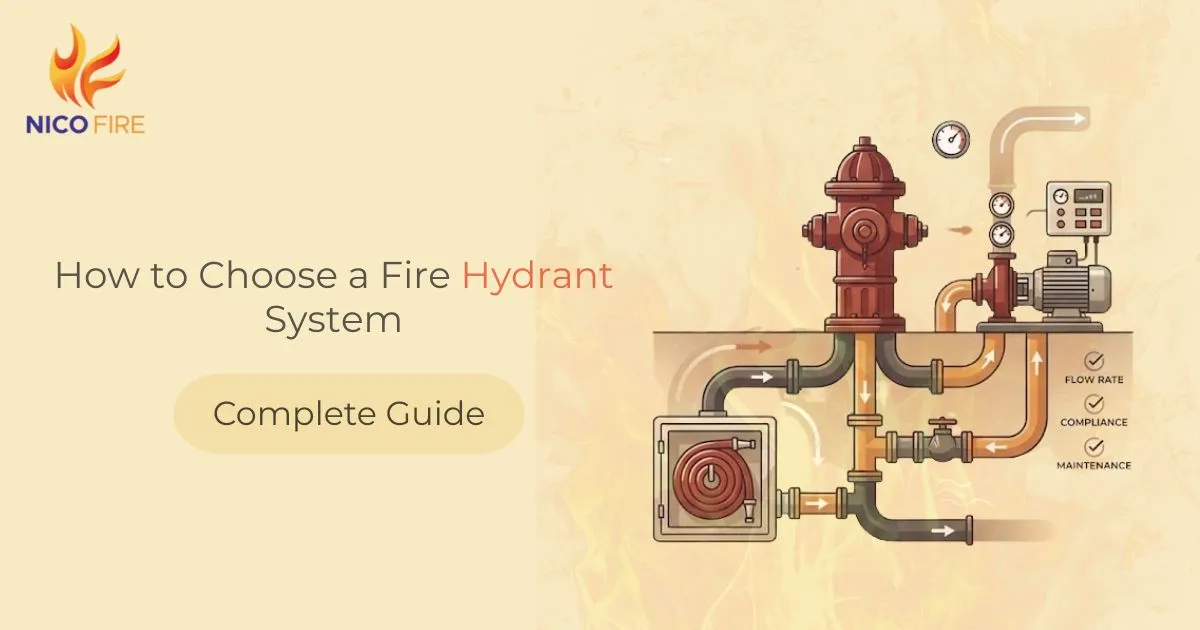
A fire hydrant system is a fixed safety system that gives water when there is a fire. It is always ready to use in an emergency. This system has fire hydrants, water pipes placed above or below the ground, valves to control water, fire pumps to push water, and fire hoses to spray water on fire. The main job of a fire hydrant system is to make sure plenty of water is available as soon as a fire starts. In Nepal, these systems are used in homes, apartments, offices, hospitals, schools, hotels, factories, and other large buildings to keep people and property safe.
Why Fire Hydrants Are Important for Fire Safety
Fire hydrants are very important for fire safety because they give water quickly during a fire. They are directly connected to the main water supply, so water comes out as soon as the valve is opened. Fire extinguishers can only be used for small fires and work for a short time. But fire hydrant systems can give water for a long time, which is needed for big fires. A good fire hydrant system makes sure water can reach every part of the building, helping stop fire from spreading to other rooms or nearby buildings.
How Fire Hydrant Systems Support Firefighting
Fire hydrant systems make it easier and faster to put out fires. When hydrants are placed in the right spots, firefighters can start spraying water without delay. They do not need to search for ponds, tanks, or other water sources. The system gives water with enough force to reach the fire area. In busy towns and growing cities of Nepal, this quick water supply helps control fire early, reduces damage, saves lives, and protects buildings from serious loss.
Choosing Fire Hydrant Systems
Wet Barrel and Dry Barrel Fire Hydrants
Fire hydrants are mainly of two types: wet barrel and dry barrel. Wet barrel hydrants always store water inside the hydrant body. They are simple to use and are suitable for places where the temperature never drops very low. However, in Nepal, temperatures change with seasons, especially in winter. Because of this, dry barrel hydrants are more commonly used in Nepal. In dry barrel hydrants, water stays below ground level and only comes up when the hydrant is opened. This design helps prevent water from freezing and damaging the system. Choosing the correct type helps the hydrant work properly for many years without frequent repair.
Special Fire Hydrant Systems for High-Risk Areas
Some buildings face higher fire risk than normal homes or offices. Factories, fuel storage areas, warehouses, and chemical plants often need special fire hydrant systems. These systems are built to handle stronger fires and higher water pressure. They may use stronger pipes, bigger pumps, and special hydrants designed for heavy use. In Nepal, such systems are commonly seen in industrial zones and large commercial projects. Using the right type of hydrant system ensures that fire safety matches the real danger level of the building.
Underground Fire Hydrants Used in City Areas
Underground fire hydrants are installed below the ground and covered with a metal or concrete box. They are mainly used in city areas where open hydrants may affect road safety, looks, or security. In Nepal, underground hydrants are often used in busy roads, commercial areas, and heritage zones. These hydrants are protected from damage, accidents, and theft. However, they must be clearly marked and checked regularly so firefighters can find and use them quickly during emergencies.
Wall-Mounted Fire Hydrants Inside Buildings
Wall-mounted fire hydrants are very common in Nepal, especially inside buildings. They are fixed on walls in corridors, staircases, parking areas, and near exits. These hydrants usually come with a hose reel and valve inside a cabinet. Wall-mounted hydrants are easy to access and do not take much space. They are widely used in apartments, offices, hospitals, malls, and hotels. Proper placement helps people or firefighters respond quickly without blocking walking paths.
Standpipe Fire Hydrant Systems for Multi-Story Buildings
Standpipe fire hydrant systems are designed for tall buildings where water needs to reach upper floors. This system uses vertical pipes to carry water from the ground level to each floor. Firefighters can connect hoses on any floor and start firefighting immediately. In Nepal, standpipe systems are commonly used in high-rise apartments, hotels, commercial towers, and office buildings. They reduce response time, make firefighting safer, and are very important where fire engines cannot easily reach higher levels.
Dry Hydrants for Rural and Low-Water Areas
Dry hydrants are used in places where there is no regular water supply line. They connect to ponds, rivers, water tanks, or reservoirs. In rural and semi-urban areas of Nepal, dry hydrants are a practical fire safety solution. They allow firefighters to use nearby water sources during emergencies. Dry hydrants are simple, low-cost, and very useful in remote locations. They ensure water is available for firefighting even where city water systems are not present.
Key Features to Look Before Buying
Water Pressure and Flow Capacity
Water pressure and water flow decide how well a fire hydrant system works during a fire. Pressure helps push water through the pipes, while flow capacity shows how much water comes out at one time. Both must be balanced to control fire effectively. Low pressure or low flow can slow down firefighting. A properly designed fire hydrant system ensures steady pressure and enough water supply at all hydrant points, which is very important for buildings and industrial areas in Nepal.
Static and Residual Pressure Check
Static pressure is the pressure in the system when water is not flowing, while residual pressure is measured when the hydrant is in use. These readings help understand the condition of the system. A big drop in pressure usually means problems like leakage, pipe blockage, or poor pipe sizing. Regular pressure testing helps keep the system healthy and ready for emergencies.
Pipe Design, Friction Loss, and Pressure Rating
As water travels through pipes, some pressure is lost due to friction. Long pipe routes, sharp bends, and low-quality materials increase pressure loss. Choosing the correct pipe size, smooth materials, and proper layout reduces this problem. Pressure rating is also important, as all pipes and fittings must handle high pressure during firefighting. This is especially necessary for tall buildings and factories.
Material Quality and Rust Protection
The materials used in a fire hydrant system affect its strength and life span. Ductile iron is widely used because it is strong and affordable, while stainless steel offers better rust resistance in wet or chemical areas. Protective coatings and internal linings help prevent rust and blockage. Good material choice reduces maintenance and keeps the system working for many years in Nepal’s climate.
Outlet Type and Equipment Compatibility
Fire hydrant outlets must match firefighting hoses and equipment. Some systems use quick-connect outlets for faster hose connection, while others use threaded outlets. Choosing the right outlet type ensures smooth coordination during emergencies. Proper compatibility helps firefighters act quickly without delays, improving overall fire safety performance.
Installation Process
Planning Before Installation
Before installing a fire hydrant system, good planning is needed. First, people check how big the building is, how many floors it has, where fire risk is high, where water comes from, and how fire trucks can reach the area. This helps decide how many hydrants are needed and where they should be installed. In Nepal, this step is very important because water pressure, roads, and building designs are different in each place. Proper planning makes sure water can reach all parts of the building during a fire.
Choosing the Right Place for Hydrants
Fire hydrants must be placed where they are easy to see and easy to use. Common places are near main doors, staircases, parking areas, and storage rooms. Hydrants should not be hidden, locked, or blocked by vehicles or goods. There should be open space around them so fire hoses can be connected easily. When hydrants are placed correctly, firefighters can work faster and control fire quickly.
Easy Access for Firefighters and Fire Trucks
Firefighters and fire trucks must reach hydrants without any trouble. Roads leading to hydrants should be clear and wide enough for fire vehicles. Hydrants should not be placed behind walls, gates, or tight spaces. Easy access is very important during emergencies because even a small delay can make fire spread faster. In busy cities and towns of Nepal, clear access helps save lives and property.
Digging, Pipe Laying, and Fixing Hydrants
After planning and marking the locations, installation work starts. Workers dig the ground and place water pipes carefully. Pipes must be laid at the right depth so they are safe from damage. Strong pipes are used so they do not break or leak. Hydrants are then fixed properly to the pipes. All pipe joints must be tight so water pressure stays strong and no water is wasted.
Connecting to the Main Water Supply
Fire hydrants are connected to the main water supply using valves. These valves help turn water on and off when needed. Strong and secure connections are very important so water flows smoothly during a fire. If connections are weak, water pressure can drop. After connecting, the system is tested to make sure water reaches every hydrant properly.
Drainage and Protection from Damage
After using a fire hydrant, extra water must drain out of the system. This helps stop pipe damage and freezing during cold weather, especially for dry barrel hydrants commonly used in Nepal. Proper drainage keeps the system safe and ready at all times. Protective covers also help protect hydrants from vehicles, accidents, and misuse.
Maintenance, Inspection, and Testing
After a fire hydrant system is installed, it needs regular care so it works properly during a fire. Maintenance and inspection help make sure the system is always ready when needed. This includes simple actions like looking at the hydrant to check for damage, cleaning dust and dirt, removing stones or waste around it, and fixing small leaks early. The valve should open and close easily, the hydrant cap should fit properly, and the pipes should be free from rust or cracks. In Nepal, weather changes, dust, road work, and traffic can affect fire hydrants, so checking them regularly helps keep the system safe and working for a long time.
Testing is also very important to make sure the fire hydrant system can supply enough water during an emergency. Flow testing checks how much water comes out and how strong the water pressure is. This test is done using simple tools like pressure gauges and flow meters. The test results help show whether the system is healthy or if there are problems like low pressure or blocked pipes. Regular testing and keeping records help meet safety rules and inspections. Seasonal care is also needed, especially for dry barrel hydrants. Before winter, leftover water should be drained out so it does not freeze and damage the system. With regular maintenance, inspection, and testing, the fire hydrant system stays ready to protect people and buildings at all times.
Frequently Asked Questions(FAQs)
What is a fire hydrant system?
A fire hydrant system is a fire safety system that supplies water during a fire to help control and stop it quickly, protecting lives and property.
Which type of fire hydrant system is best for buildings in Nepal?
In Nepal, dry barrel hydrants, wall-mounted hydrants, and standpipe systems are commonly used depending on building size, floor count, and water source.
How much does a fire hydrant system cost in Nepal?
The price of a fire hydrant system in Nepal varies by building size and components. A basic system for a small building can start around NPR 100,000–250,000, while larger systems with pumps and extensive piping may cost NPR 300,000 to 1,000,000+.
Is a fire hydrant system required by law in Nepal?
Yes, many commercial buildings, apartments, hospitals, and hotels are required to install fire hydrant systems to meet local fire safety rules and standards.
How often should a fire hydrant system be checked and tested?
A fire hydrant system should be inspected visually every month and undergo flow testing at least once a year to make sure water pressure and flow meet safety needs.
Can a fire hydrant system work without a city water supply?
Yes, in areas without regular municipal water supply, fire hydrant systems can use water tanks, underground reservoirs, or dry hydrants connected to ponds or wells as an alternative water source.
Conclusion
A fire hydrant system is one of the most important parts of fire safety for any building. Choosing the right system, installing it properly, and taking regular care of it helps control fire early and reduce damage. When the system is well planned, placed in the right locations, and checked regularly, it works smoothly during emergencies. Regular inspection, testing, and seasonal care also help prevent sudden failure. By giving attention to these simple steps, property owners can improve safety, protect lives, and keep buildings secure for the long term.
Protect your property with a reliable fire hydrant system. Buy the best fire hydrant system in Nepal from Nicofire and get trusted fire safety solutions with expert support. Explore our fire safety products today and stay protected.